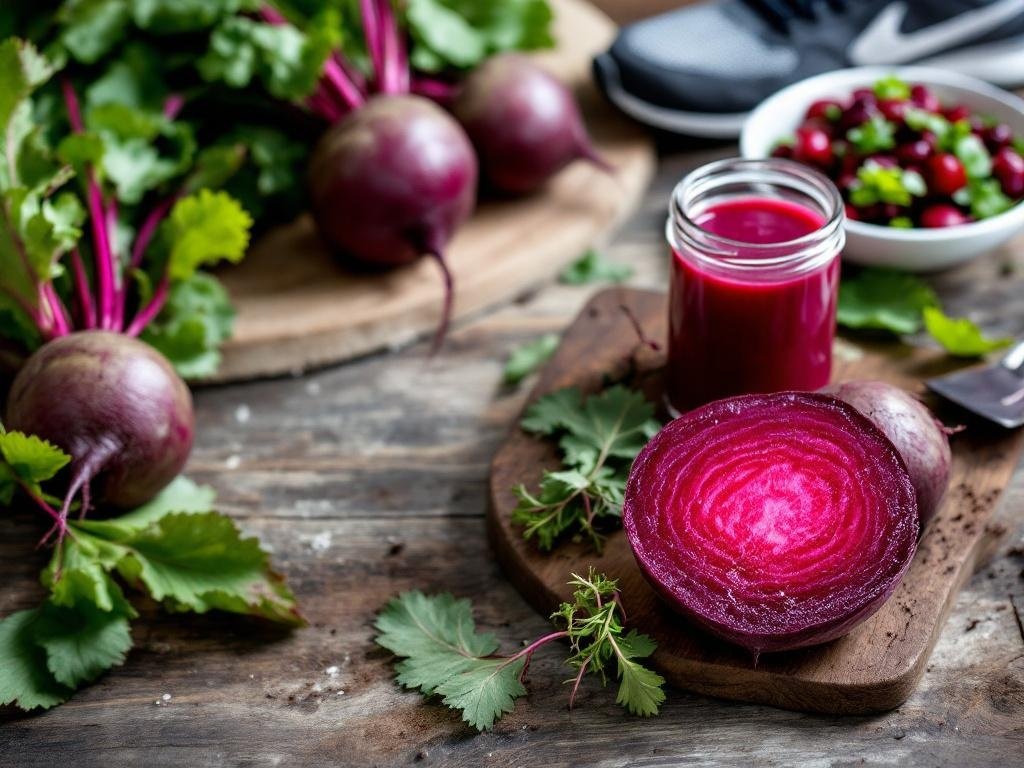
Beetroot is a vibrant root vegetable valued for its earthy flavor, pigments and nutritional profile. This article examines beetroot’s botany and history, detailed nutrient and bioactive composition, evidence-based health effects, culinary techniques and storage, plus cultivation and safety considerations. Each chapter synthesizes verified sources with practical guidance for cooks, athletes, gardeners and health-conscious readers.
Origins taxonomy and historical context
Botanical Classification
Beetroot belongs to the species Beta vulgaris subsp. vulgaris within the botanical family Amaranthaceae, formerly classified in Chenopodiaceae. The cultivated forms of beetroot used primarily for their edible storage roots are classified under the Conditiva Group (also called the garden beet group). This group encompasses the familiar red beetroots found in markets, distinguished by their globular or cylindrical roots and reddish to purple pigmentation, which contrasts with other groups focused on different traits. A key distinction within Beta vulgaris is between the garden beet (Conditiva Group) and the sugar beet (Altissima Group). While garden beet is grown for its sweet, reddish root as a vegetable, sugar beet is cultivated for its high sucrose content and is a major industrial source for table sugar, with pale, tapered roots containing much less pigment.
Subspecies and Cultivar Groups of Beta vulgaris
- Conditiva Group (garden beet / beetroot)
- Altissima Group (sugar beet)
- Crassa Group (mangelwurzel or fodder beet)
- Cicla Group (Swiss chard or leaf beet)
Etymology
The word beet derives from the Old English “bete,” which traces to the Latin “beta,” meaning “beet.” The term “root” comes from the Old English “rōt,” ultimately from Proto-Germanic origins, referring to the underground part of a plant. Hence, “beetroot” specifically combines the plant’s name with the edible swollen root.
Domestication and Historical Uses
Archaeological evidence and historical texts indicate that beet was first domesticated in the eastern Mediterranean region and Middle East, possibly as early as the second millennium BCE. Initially, wild Beta species were valued for their leafy greens rather than for their roots, which were used later as the swollen root trait was gradually selected. The Greeks and Romans consumed both the leaves and roots, with roots sometimes used as food and sometimes as a medicinal plant. Historical medicinal uses of beetroot included treatments for digestive issues, fevers, and wounds. By the Middle Ages, the root was firmly established as an edible vegetable in Europe.
Historical Milestones of Beetroot Development
- 2nd millennium BCE: First absorbed into cultivation for greens
- Ancient Rome: Roots and leaves both used medicinally and culinarily
- 16th century CE: Red garden beetroot described with swollen root in Europe
- 18th century CE: Selective breeding yields improved table and sugar beet types
- 19th century CE: Commercial sugar beet industry emerges in Europe
Spread and Modern Economic Importance
Beetroot spread throughout Europe with selective breeding, leading to the modern red-rooted varieties in the 16th century. The crop plays a significant economic role: the garden beet is a staple vegetable in Eastern European, Mediterranean, and British cuisines, while the sugar beet is a leading global source of table sugar. Both roots and leaves are edible, and table beets are consumed fresh, pickled, or processed. Today, Russia, the United States, France, and Germany are major producers, with the global sugar beet industry accounting for roughly 20% of world sugar production—clearly distinguishing the economic pathways of sugar versus table beet types.
Nutritional profile and key bioactive compounds
Beetroot’s nutritional profile highlights its low calorie content, high water percentage, and dense presence of select micronutrients and phytochemicals. Per 100 grams of raw beetroot, Wikipedia reports the following composition:
- Calories: 43 kcal
- Water: 87.6%
- Carbohydrates: 9.6 g (including 6.8 g sugars and 2.8 g fiber)
- Protein: 1.6 g
- Fat: 0.2 g
- Folate (Vitamin B9): 27% of Daily Value (DV)
- Manganese: 13% DV
- Other notable micronutrients: Iron (4% DV), Vitamin C (6% DV), Potassium (9% DV), Magnesium (6% DV)
The distinctive health-related properties of beetroot arise from several key bioactive compounds:
- Betalain pigments: Betalains are a family of red-violet (betacyanins) and yellow (betaxanthins) pigments, primarily found in the root and responsible for beetroot’s characteristic color. In the botanical order Caryophyllales, betalains replace the anthocyanins seen in most other red vegetables. Betanin is the predominant compound, highly water-soluble and easily lost during prolonged boiling or exposure to light; raw, roasted, or lightly cooked preparations preserve pigmentation best.
- Dietary nitrate: Beetroot accumulates nitrate (NO₃⁻), mainly in the root and to a lesser extent in the leaves. After ingestion, oral bacteria convert nitrate to nitrite and then to nitric oxide (NO) in the body, a molecule vital for vasodilation and cardiovascular health. Nitrate content diminishes slightly with boiling but remains significant in cooked forms and beetroot juice.
- Betaine: Also known as trimethylglycine, this osmoprotectant is present in high concentrations in both root and juice. Betaine is involved in methylation pathways and may help regulate homocysteine metabolism. Levels are generally stable under normal cooking conditions but can be affected by extensive leaching into cooking water.
In summary, bioactive compounds in beetroot exert these major actions:
- Betalains: Antioxidant and anti-inflammatory capacity
- Dietary nitrate: Blood pressure regulation and improved endothelial function
- Betaine: Support of hepatic and cardiovascular health through biochemical methylation
Processing and cooking notably influence the retention of betalains and nitrates, while the macro- and micronutrient makeup remains largely resilient except for some heat-sensitive vitamins. The concentration of these compounds is highest in the root, though leaves are also nutritious and edible, especially regarding folate and nitrates.
Health effects mechanisms and evidence
Cardiovascular Effects
- Mechanism: Beetroot is rich in dietary nitrate, which is absorbed and converted to nitrite by oral bacteria. Nitrite is further reduced to nitric oxide (NO) in the body, a key molecule that relaxes blood vessels and improves vascular function.
- Evidence Level: Strong/Consistent
- Randomized controlled trials consistently report reductions in systolic and diastolic blood pressure after beetroot juice consumption. According to well-established reviews and Wikipedia, reductions of approximately 4–10 mmHg in systolic blood pressure have been documented within hours to days of supplementation in both healthy individuals and those with hypertension.
- The blood-pressure-lowering effect appears dose-dependent and is most pronounced 2–6 hours after ingestion, diminishing after 24 hours unless intake continues.
- Beetroot consumption may also improve endothelial function and arterial stiffness, though these results are sometimes less robust than reductions in blood pressure.
- Practical takeaway: Consuming 250–500 ml (about 1–2 cups) of beetroot juice may support temporary blood pressure lowering, but effects are reversible if intake stops.
Exercise Performance
- Mechanism: Nitric oxide generated from beetroot nitrate improves muscle oxygen efficiency during exercise.
- Evidence Level: Moderate
- Multiple placebo-controlled studies in athletes and physically active adults show that acute or short-term beetroot juice supplementation (often 500 ml providing ~300–500 mg nitrate) can modestly improve endurance exercise performance, reducing oxygen cost and increasing time to exhaustion in cycling and running by 2–3%.
- Effects are most reliable in subelite or recreational athletes; benefit in trained elite athletes is inconsistent.
- Practical takeaway: Ingesting beetroot juice 2–3 hours before aerobic exercise is likely most effective; raw or cooked beets provide less nitrate per gram than juice.
Antioxidant and Anti-Inflammatory Actions
- Mechanism: Betalains, unique pigments in beetroot, show strong antioxidant capacity in vitro by scavenging free radicals and reducing lipid peroxidation. Antioxidant activity is commonly measured using assays like ORAC or FRAP.
- Evidence Level: Limited/Conflicting
- Animal and preliminary human studies suggest that beetroot and its extracts can reduce certain inflammatory markers and oxidative stress, but clinical evidence in healthy adults is limited and outcomes vary. There is no strong evidence that beetroot supplementation prevents chronic diseases via antioxidant action alone.
- Practical takeaway: While beetroot offers antioxidant activity, significant anti-inflammatory or disease-prevention effects from typical dietary intake are unproven in large-scale trials.
Other Reported Outcomes
- Cognitive Effects: Some small studies suggest acute beetroot juice intake may increase cerebral blood flow and enhance aspects of cognitive performance (e.g. reaction time) in older adults, likely via NO-mediated vasodilation. Evidence Level: Limited
- Digestive Health: Beetroots provide moderate fiber, supporting regularity, but no unique digestive benefit is confirmed apart from other fiber-rich vegetables. Evidence Level: Limited/Conflicting
- Metabolic Effects: Evidence on blood glucose and lipid effects is insufficient to draw practical conclusions.
- Aim for 250–500 ml beetroot juice or a similar nitrate dose (6–12 mmol) for blood pressure or endurance benefits, ideally 2–3 hours before desired effect.
- Include whole or cooked beets for general nutrition and fiber, but recognize juice is most effective for performance/vascular results.
- Beetroot supplements/powders vary in nitrate content—check labels and start with tested doses.
- Allow for individual response variation and consult healthcare professionals if hypertensive or using medications.
Culinary uses selection and preservation techniques
Beetroot Selection and Storage
- Choosing at the market: Select beetroots that feel firm and heavy for their size, with smooth, unblemished skin. Very small roots can be tender but may dry out quickly; medium-sized (2–3 inch diameter) roots are ideal for most uses. Look for vibrant, fresh greens still attached—these are edible and indicate a fresher root.
- Storing roots: Trim greens to leave about 2 cm stem to prevent moisture loss. Store roots unwashed in a perforated bag in the vegetable drawer of your refrigerator; the typical shelf life is 2–3 weeks. If roots start to soften, use promptly.
- Storing greens: Wrap separately in damp paper towel and refrigerate for 2–4 days; use sooner for best texture and nutrients.
- Preservation tips: Beetroots can be pickled, canned, frozen (after cooking and peeling), or fermented. Blanching before freezing can help maintain texture and color. Always follow food safety guidance for home preservation.
Culinary Methods and Their Effects
- Roasting: Intensifies sweetness and preserves earthy flavor; some loss of vitamin C but moderate retention of folates and betalains (sources: Wikipedia, USDA). Roasted beets are key for “roasted beets” recipes and salads.
- Boiling and steaming: Boiling may lead to loss of water-soluble nutrients (vitamin C, some folate). Steaming better preserves nutrients and texture; both soften flavor.
- Pickling and fermenting: Adds acidity which helps preserve betalain pigments and color. Vitamin C is largely lost, but folate remains stable.
- Juicing: Retains most nitrates and pigments; some fiber is lost but juice is a popular form for health-focused “beet juice” consumption.
- Raw uses (salads, smoothies): Best for retaining vitamin C and antioxidants; shred or spiralize for “beetroot salad.”
Common Preparations (Step-by-Step)
- Roasting Whole Beets
- Preheat oven to 200°C (400°F).
- Trim tops, scrub beets; do not peel.
- Wrap each beet loosely in foil.
- Roast on a baking sheet 45–60 minutes (depending on size), until easily pierced with a knife.
- Cool, then peel under cold water to minimize staining hands.
- Quick Pickled Beets
- Boil or roast beets, then peel and slice.
- Pack slices in a clean jar with spices (e.g. dill, peppercorn, garlic).
- Heat equal parts vinegar and water with 1 Tbsp sugar and 1 tsp salt per cup.
- Pour hot brine over beets; chill. Ready in 24 hours, keeps up to 2 weeks in fridge.
- Fresh Beet Juice
- Wash and trim beetroot; peel if desired.
- Cut into chunks, juice with carrots, apple, or ginger for milder taste.
- Drink immediately to best preserve vitamin C and color.
Flavor Pairings and Serving Ideas
- Oranges, goat cheese, walnuts (salad)
- Dill, caraway, apple (slaw or pickles)
- Cumin, yogurt, garlic (soup or dip)
Practical Tips
- Use gloves and line cutting boards to avoid beetjuice stains.
- Add vinegar or lemon to cooking water to help maintain color.
- Gentle cooking preserves more betalains; prolonged boiling fades color and antioxidants (Wikipedia: Beetroot, Nutrient loss).
Risks interactions cultivation and sustainable practices
Safety and interactions
- Beeturia—the reddish or pink discoloration of urine or stool after consuming beetroot—is a harmless and common occurrence for some individuals. It signals beet pigment excretion rather than any health threat.
- Beetroot’s naturally high nitrate content helps lower blood pressure. However, when combined with antihypertensive medications, there is a risk of excessive hypotension. People taking blood pressure medications, especially those with unstable readings, should check with their clinician before adding beetroot supplements or large quantities to their diet.
- Nitrates in beetroot are generally safe for adults, but certain populations—such as infants under one year and individuals on specific heart or circulatory medications—should exercise caution. Methemoglobinemia, a rare condition linked to excessive nitrate intake, is a particular concern for infants. Always verify current cautionary advice for infants and prescription drug interactions on Wikipedia and other authoritative sources.
- If you notice dizziness, fatigue, or rapid heartbeat after consuming large amounts of beetroot (especially juice), consult your healthcare provider to rule out underlying issues or medication interactions.
Allergies and contraindications
- Beet allergies are rare, but possible. Symptoms may include hives, itching, digestive upset, or—rarely—serious reactions like swelling or difficulty breathing. If you experience these symptoms after trying beetroot, discontinue use and seek medical assessment. Prevalence is low according to current evidence, but isolated allergic responses have been noted in case studies.
- Individuals with oxalate kidney stones may need to moderate beetroot intake due to its moderate-to-high oxalate content. According to authoritative health sources, excess oxalate can contribute to stone formation in susceptible individuals.
- If you have a known intolerance to other root vegetables or beta vulgaris family members, introduce beetroot cautiously, monitoring for adverse effects.
Cultivation and sustainability
- Soil and site: Beetroots grow best in loose, well-drained soils rich in organic matter. Optimal soil pH ranges from 6.0 to 7.5. A full-sun site encourages vigorous root growth and color development.
- Planting schedule: Sow seeds directly outdoors in spring as soon as soil can be worked (soil temperature above 7°C/45°F), repeating every two to three weeks for a continuous harvest. In milder climates, autumn sowing for a winter crop is possible.
- Spacing: Sow seeds 1–2 cm deep and 8–10 cm apart in rows spaced 30–40 cm to allow for bulb development. Thinning seedlings supports uniform root size.
- Pest and disease notes: Common challenges include leaf miners, aphids, and fungal leaf spots. Maintain crop rotation and use floating row covers early in the season as preventive measures. Always verify updated agronomy practices and disease resistances on the Beta vulgaris Wikipedia page.
- Harvest cues: Harvest when roots reach 3–7 cm in diameter—bigger roots may be tougher. Greens can be harvested earlier for salads and cooking.
- Sustainability practices:
- Incorporate crop rotation (especially with legumes and cereals) to reduce pest buildup and maintain soil fertility.
- Mulch to conserve moisture and suppress weeds. Drip irrigation is preferred over overhead watering to minimize disease.
- Beetroot is an economic staple in some regions for both fresh market and processed products, contributing to agricultural diversity.
Conclusions
Beetroot blends compelling nutrition, distinctive pigments and dietary nitrates that support culinary creativity and potential cardiovascular and performance benefits. Understanding its composition, scientifically assessed effects, safe preparation and cultivation helps readers use beetroot wisely. Rely on verified sources such as Wikipedia and peer-reviewed research and consult health professionals for personalized advice when using concentrated supplements or if you have medical conditions.