

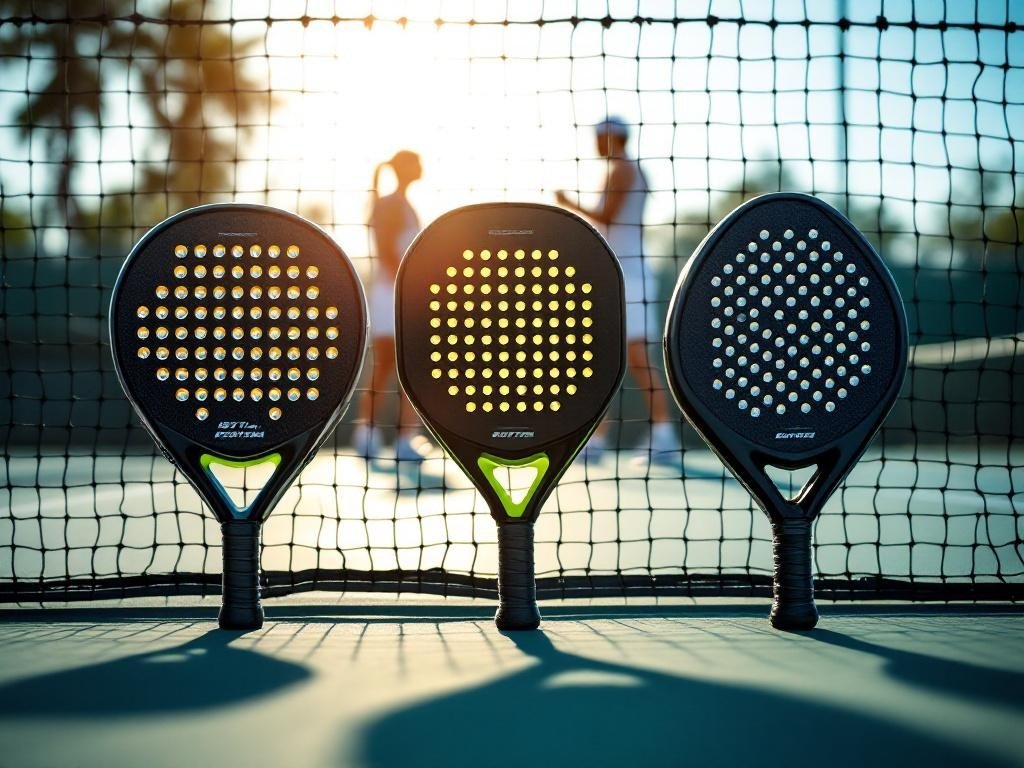
Discover how to choose the best padel racket and find top-performing models for 2025. This guide explains racket construction, shapes, materials, balance and core technology, and matches racket choices to playing style and level. Read on for comparisons and buying advice for beginners to advanced players to help you pick with confidence.
Padel racket fundamentals and official definitions
What is a padel racket
- The padel racket is a compact, solid racquet featuring a perforated, stringless hitting surface. Unlike tennis rackets (which use a hoop with woven strings) or pickleball paddles (with a flat, unperforated face), padel rackets are made of a continuous, rigid panel with regularly spaced holes. The holes reduce air resistance and help with maneuverability. These rackets are integral to the game of padel and are uniquely designed to accommodate the sport’s enclosed courts and rebound dynamics.
Official size and weight ranges
- According to the International Padel Federation (FIP), padel rackets must not exceed 45.5 cm in length, 26 cm in width, and 38 mm in thickness. Most models are manufactured close to these maximums.
- Regulatory weight bands for adult rackets commonly range from 340g to 375g. Some specialized rackets may be slightly heavier or lighter, generally falling between 330g and 390g.
- Balance is typically measured from the handle end, expressed in millimeters. “Head-heavy” or “head-light” describes the balance point relative to the racket’s center.
Main components
- Face: The striking area, perforated to optimize aerodynamics and impact response.
- Frame: The outer rim protecting the core and maintaining overall structure.
- Core: The interior layer, usually made of EVA (ethylene vinyl acetate) or foam, determining comfort and rebound qualities.
- Grip: The handle covering, designed for secure hand placement and sweat absorption.
- Holes: Distribution and pattern of drilled holes modulate air flow and control ball departure angles.
Common materials
- Carbon fiber: High stiffness and durability, usually in advanced rackets for power and longevity.
- Fiberglass: Softer and more flexible, offering greater comfort and affordable pricing.
- EVA foam: Dense and elastic core offering firmer touch and power.
- Polyethylene foam: Lower density core for softer feel and easier control.
Short glossary
- Sweet spot: Central area yielding maximum power/control with least vibration.
- Balance: Distribution of weight; impacts handling and stroke style.
- Head-heavy: Racket weighted toward the top, aiding power.
- Head-light: Racket weighted toward handle, aiding control and reaction.
- Core hardness: Stiffness of inner foam; affects bounce, feel, and power.
- Spin textures: Surface finishes enhancing grip on the ball for added spin.
How racket design affects play and performance
-
Shapes and sweet spot
- Round-shaped rackets have the largest and most centered sweet spot, making them highly forgiving for off-center hits. They offer superior control and suit beginners or control-oriented players. For example, a round padel racket helps new players consistently return balls even with imperfect technique.
- Teardrop-shaped rackets position the sweet spot slightly higher for a balance of power and control. Intermediate players enjoy both attacking shots and precision. A teardrop can make it easier to drive deep smashes while retaining tactical placement potential in rallies.
- Diamond-shaped rackets move the sweet spot closer to the top, maximizing leverage for power shots. However, their reduced sweet spot size demands accuracy, fitting experienced or power-focused players who excel at precise contact and aggressive overheads.
-
Balance and maneuverability
- Head-heavy balances place more weight toward the top, amplifying power on smashes and volleys but may slow reaction speed at the net.
- Head-light rackets enhance maneuverability, making quick wrist movements, snap volleys, and reaction blocks easier; these are favored by doubles specialists and defensive players needing rapid recovery.
-
Weight and inertia
- Padel rackets typically range from 350g–390g. Lighter rackets (350–365g) increase swing speed, reduce fatigue for beginners or juniors, but may lack stability against heavy hitters.
- Heavier rackets (370–390g) provide greater inertia for powerful shots but require greater arm strength; advanced players use this extra mass for drive and stability, especially under fast exchanges.
-
Core hardness and feel
- Soft EVA or foam cores deliver higher ball dwell time on the face, enhancing touch and comfort while absorbing vibrations. They benefit players with arm issues or those seeking forgiveness on defensive shots.
- Hard EVA cores return more energy for explosive power, but transmit more vibration—targeting aggressive players who prioritize offensive, fast-paced play.
-
Surface texture and spin
- Abrasive or textured surfaces create additional friction on ball contact, aiding advanced players in generating topspin, sidespin, and complex slice shots during high-level rallies.
-
Trade-offs: Matching racket design to playing style
- Beginner: Round shape, low-medium weight, soft core, head-light. Sacrifices power for forgiveness.
- Intermediate: Teardrop, balanced or lightly head-heavy, moderate weight, blended core. Control with accessible power.
- Advanced: Teardrop/Diamond, heavier, head-heavy, hard core, textured face. Demands precision, delivers maximum power and spin.
- Power player: Diamond, head-heavy, firm core, high mass.
- Control player: Round, head-light, softer core, reduced weight.
- Doubles specialist: Lighter, head-light, larger sweet spot, supports fast reactions and net play.
Best padel rackets 2025 trends and top models
Key 2025 trends
- Hybrid Carbon Composites: Racket faces increasingly combine 18K or 12K carbon with fibreglass layers or aramid to deliver responsive power and enhanced durability, leading to more stable shots under high pace—valuable both offensively and defensively.
- Advanced Spin Textures: New granular or embossed 3D surface technologies maximize ball grip, assisting players in generating topspin and slice on demand. This trend means aggressive players can deploy heavier, more reliable spin on volleys and bandejas, influencing match outcomes.
- Multi-Zone Vibration Dampening: Foam-injected bridges and elastomeric inserts are now common, reducing arm fatigue by absorbing shock across specific zones—key for comfort and injury prevention in long sessions or for those with epicondylitis history.
- Optimized Weight Distribution: Enhanced internal layouts and perimeter weighting improve stability while keeping swing weights manageable, making it easier for players to transition from fast net exchanges to powerful smashes.
- Eco-friendly Materials: Select 2025 ranges use recycled polymers or bio-based resins, appealing to sustainability-minded consumers with minimal compromise on performance or longevity.
Top model categories
- Best for Beginners
- Head Evo Sanyo 2025
- Weight: 360–375g
- Shape: Teardrop
- Core: Soft EVA
- Main: Graphite/fibreglass
- Balance: Even
- Price: €70–90
- Large sweet spot, lightweight and forgiving – perfect for new players building technique without excessive strain.
- Babolat Reveal 2025
- Weight: 345–360g
- Shape: Round
- Core: Low-density EVA
- Main: Fibreglass
- Balance: Head-light
- Price: €65–85
- Exceptionally easy to maneuver, great for touch and confidence early in one’s padel progression.
- Head Evo Sanyo 2025
- Best Control Racket
- Bullpadel Vertex Control 2025
- Weight: 365–375g
- Shape: Round
- Core: MultiEva
- Main: 12K Carbon
- Balance: Head-light
- Price: €230–260
- Superb touch and accuracy owing to premium carbon and subtle vibration-damping; ideal for defensive strategists.
- Adidas Adipower CTRL 3.3 2025
- Weight: 360–375g
- Shape: Round
- Core: EVA Soft Performance
- Main: 15K Carbon Aluminized
- Balance: Even
- Price: €240–280
- Wide sweet spot and soft feel help with ball placement and quick reactions at the net.
- Bullpadel Vertex Control 2025
- Best Power Racket
- NOX AT10 Genius Attack 18K 2025
- Weight: 360–375g
- Shape: Diamond
- Core: HR3 Black EVA
- Main: 18K Carbon
- Balance: Head-heavy
- Price: €310–350
- Aggressive diamond profile and firm feel unlock maximum overhead power for experienced attackers.
- Bullpadel Hack 03 2025
- Weight: 365–375g
- Shape: Diamond
- Core: MultiEva
- Main: Tricarbon
- Balance: Head-heavy
- Price: €280–310
- For players demanding raw power in smashes without sacrificing durability; pro-level pedigree.
- NOX AT10 Genius Attack 18K 2025
- Best Spin Racket
- Adidas Metalbone HRD+ 3.3 2025
- Weight: 345–375g (customizable)
- Shape: Diamond
- Core: Eva Soft Performance
- Main: Carbon Aluminized + Spin Blade Decal
- Balance: Adjustable
- Price: €300–340
- Innovative 3D Spin Blade surface allows heavy spin shots; customizable weights fit intermediate to advanced styles.
- Royal Padel Whip Hybrid 2025
- Weight: 360–375g
- Shape: Teardrop
- Core: Hybrid Polyethylene/EVA
- Main: Fibreglass/Carbon + rough texture
- Balance: Even
- Price: €160–190
- Distinctive rough face excels at gripping the ball for aggressive spin play.
- Adidas Metalbone HRD+ 3.3 2025
- Best Value/Budget
- Siux Fenix Lite 2025
- Weight: 355–370g
- Shape: Hybrid
- Core: EVA Soft
- Main: 3K Carbon
- Balance: Even
- Price: €110–130
- Solid all-round specs at a fraction of flagship prices, great durability and multi-skill usability.
- Wilson Ultra Team V2 2025
- Weight: 361g
- Shape: Tear
- Core: Low Density EVA
- Main: Fibreglass/carbon composite
- Balance: Even
- Price: €95–120
- Reliable for improving intermediates seeking quality at an accessible price.
- Siux Fenix Lite 2025
- Best for Advanced/Elite Players
- Bullpadel Vertex 04 Pro 2025
- Weight: 365–375g
- Shape: Diamond
- Core: MultiEva
- Main: Xtend Carbon 12K
- Balance: Head-heavy
- Price: €350–390
- Top level stability, adjustability, and explosive power for tour-level competitors.
- NOX ML10 Pro Cup Luxury 2025
- Weight: 360–375g
- Shape: Round
- Core: HR3 EVA
- Main: Carbon/fibreglass
- Balance: Even
- Price: €220–250
- Provides a blend of feel, control, and tournament-ready performance trusted by professionals.
- Bullpadel Vertex 04 Pro 2025
How to interpret 2025 marketing claims
- “K” Carbon denotes fabric density but not always quality; test for real-world stiffness and response.
- Spin surface can refer to texture or lacquer—feel for grip in play, not just appearance.
- Vibration dampening may target only parts of the frame; judge by feel and fatigue over a session.
- “Pro” or “Elite” tags suit aggressive, high-level players and often require advanced technique for proper use.
- “Light” models vary widely—always check actual gram range, not just the label.
Testing comparing and interpreting racket performance
Pre-test checklist
- Warm-up: Begin with a thorough physical and hitting warm-up to ensure consistent form and avoid early fatigue skewing results.
- No fresh strings: Padel rackets are stringless, but check that the hitting surface and core are undamaged for each test racket.
- Consistent balls: Use new or identically worn padel balls throughout tests to minimize variable bounce and speed.
- Consistent court: Evaluate all rackets on the same court, under comparable temperature, humidity, and lighting to eliminate external factors.
Core performance tests
- Power/Smash Consistency: Hit 10–15 overhead smashes with each racket. Score from 1–10 based on max bounce, exit speed, and repeatability. High power is crucial for offensive play and finishing points.
- Control/Placement Drills: Execute cross-court and down-the-line groundstrokes aiming at marked zones. Rate from 1–10 by number of hits landing in target area. Sharp control aids defensive recovery and net play.
- Volley Maneuverability: Perform rapid-fire volley exchanges. Judge on ease of racket repositioning and ability to absorb pace, rating 1–10. Maneuverability impacts quick net duels and hand speed.
- Serve Accuracy: Serve 10 balls, tallying how many accurately land in the desired service box or spin zone. Rank 1–10 for control and spin response. Serve precision often sets the tone for the point.
- Spin Generation: Attempt topspin and slice shots from the baseline. Record observable deviation or bounce, rating 1–10. Spin capability is increasingly vital with new surface tech in 2025 models.
Quantitative vs qualitative observations
- Quantitative: Scores for power, accuracy, spin, and control are tracked as numbers for comparison.
- Qualitative: Note feel-based attributes like vibration upon impact, “sweet spot” forgiveness, and perceived balance (head-heavy/light). These affect comfort and confidence over long sessions.
Comparison protocol
- Compare 3–5 rackets, rotating rackets after every drill among players to prevent fatigue and personal bias.
- Perform 2–3 sets per test per racket to account for outliers.
- Average the numeric scores for each performance metric across all participants to identify top performers.
Interpreting specs versus real play
- Specs such as weight, balance, or core density offer helpful general orientation but can feel different on court depending on play style.
- Prioritize on-court feel, maneuverability, and control over manufacturer claims where there’s contradiction—especially as tech innovation in 2025 pushes specs boundaries.
Printable Demo Checklist:
- Warm up fully
- Ensure even court and conditions
- Record power, control, volley, serve, spin (1–10)
- Swap rackets often and average scores
- Note feel, vibration, balance, forgiveness
- Cross-check specs but trust your play feedback
Buying maintenance and fitting advice for long term performance
-
Where to buy and try
- Specialty stores offer expert advice and in-person racket handling, letting you assess grip and balance directly; however, selection may be smaller and prices higher than online. Demo centres or club rental programs allow hands-on trial of multiple models, revealing how a racket plays with your unique swing, but availability may be limited depending on local stock. Online retailers provide the broadest range and often the best deals, but you’ll need to rely on return policies and user reviews, and can’t test before purchasing. To maximize test-driving, ask about demo events or ‘try before you buy’ offers at clubs and stores.
-
Fit and grip considerations
- Choosing the right grip size is key; too thick causes fatigue, too thin reduces control and increases injury risk. Most adults need a handle circumference of 4–4.5 inches; always try different grip builds. Overgrips can fine-tune thickness and comfort—replace once worn, slick, or compressed. Premium overgrip materials (tacky or absorbent) help prevent slippage and blisters. Re-grip your main handle every season or sooner if you play regularly or sweat heavily.
-
Care and maintenance
- Wipe your racket after each session to remove sweat and grit. Store in a cool, dry bag—extreme heat can warp polymers and foam, and freezing cold can cause delamination or microcracks. Use edge tape to protect against chips if you scrape the court. Regularly check for surface cracks, loose edge guards, and separation between layers (delamination). Most rackets perform best when replaced every 12–24 months with frequent use or sooner if heavy wear appears.
-
Warranty and after-sales
- Seek a clear 6–12 month warranty against defects—this typically covers manufacturing or material flaws, not accidental damage. Register new rackets online promptly to activate coverage. Keep receipts and serial numbers for hassle-free claims.
-
Budgeting and upgrade path
- Beginners should budget €70–€120; intermediates €120–€220 for added tech; advanced players €220 and above for pro-level construction. Upgrade when you notice loss of power, excessive vibration, or new performance needs. Sell or trade old rackets via club boards or online platforms—gently used models retain value.
-
Final buyer’s checklist
- Tested for fit, grip and swing feel
- No visible cracks, defects, or delamination
- Comfortable grip size and fresh overgrip
- Proper warranty coverage registered and receipt kept
- Suits budget and level with room to upgrade
- Includes a protective cover or bag
Conclusions
Choosing the right padel racket blends knowledge of materials, shape, weight and player profile with hands-on testing. Use the 2025 trends and selection criteria here to prioritise comfort, control and durability over hype. Try rackets before you buy, follow the testing checklist and maintain your gear to get the best long-term performance and faster improvement on court with confidence.