

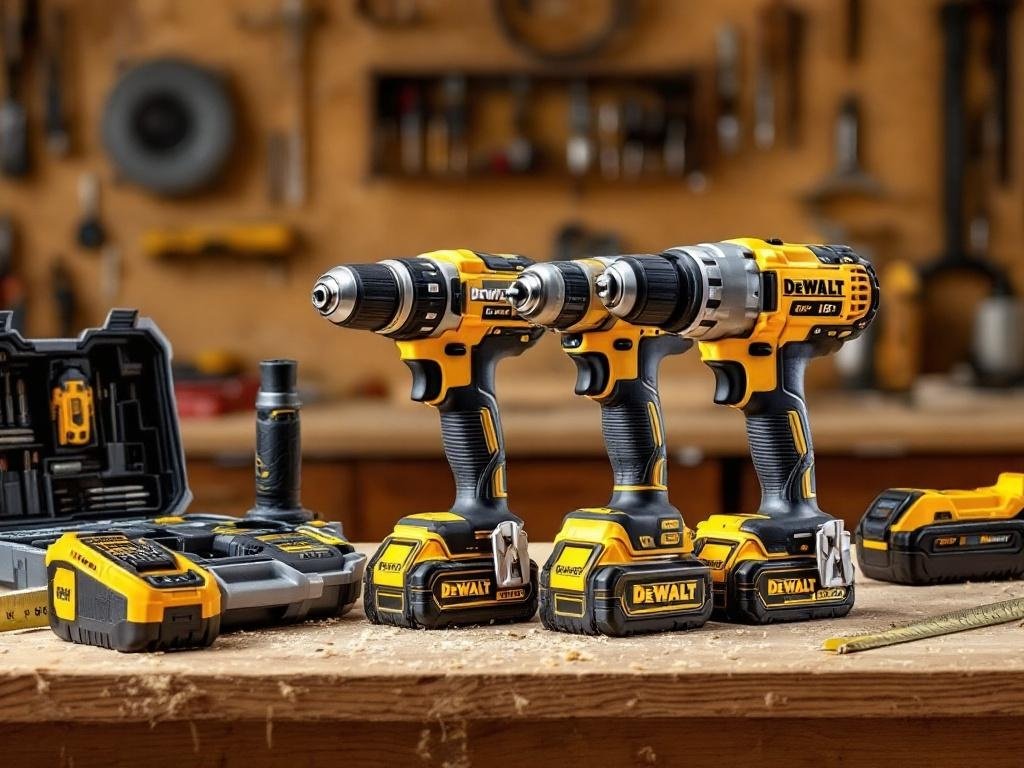
Cordless drills are essential for professionals and DIYers, with DeWalt and Milwaukee leading the market. This article explains differences between cordless, hammer and impact drills, the role of 20V lithium-ion batteries, and what to look for in drill and drill set purchases. Read on for comparisons, performance metrics, battery care, and recommendations to choose the best cordless drill for your needs.
Understanding drill types and core functions
The world of drills consists of several core families, each designed for specific applications and user needs. The most common categories include the cordless drill, power drill (often corded), hammer drill, impact drill, and impact driver. Top brands like DeWalt and Milwaukee have extensive lineups, offering everything from the versatile cordless drill DeWalt to the heavy-duty hammer drill cordless options suited for demanding materials. Understanding the unique mechanisms and use cases for each type is the foundation for choosing the best cordless drill or drill set for your workflow.
1) Cordless drill fundamentals
Cordless drills rely on rechargeable batteries, typically lithium-ion, providing portability and freedom from cords. A typical cordless drill Dewalt or Milwaukee cordless drill offers variable RPM ranges (generally from 0–500 up to 0–2000+ RPM) adjustable through a trigger and gear selector. Torque — the twisting force allowing a drill to drive screws or bore holes — is regulated via a clutch ring, which prevents overdriving fasteners or damaging materials. Modern cordless drills use keyless chucks, enabling quick bit changes by hand. These features make power drill cordless sets ideal for general drilling and screwdriving in wood, metal, or plastics.
2) Hammer drill mechanics
Hammer drills add a percussive hammering motion to the standard drilling action. This mechanism rapidly moves the drill bit forward and backward, creating a “chipping” effect essential for masonry and concrete. Unlike rotary hammers, which use a piston system for heavier impacts, a hammer drill (manual or cordless) uses cam plates for lighter yet high-frequency blows. Choose a hammer drill cordless model for moderate-duty concrete or brick drilling, but opt for a rotary hammer on more demanding jobs.
3) Impact drill and impact driver differences
Impact drills, better known as impact drivers, deliver high-torque rotational impacts. Instead of hammering into material, they employ internal mechanisms that strike rotationally, making them ideal for rapidly driving screws, lag bolts, and long fasteners without stripping. The difference from a hammer drill lies in the axis of impact: impact cordless drill models focus on screwdriving rather than producing axial hammering for harder materials.
4) Power drill and corded comparison
- Corded Power Drill Pros: Sustained power output, no battery limitations, often lighter for same power level, excellent for demanding, extended use.
- Cons: Limited mobility due to cord, need for power source, less convenient on sites without outlets.
- Cordless Power Drill Pros: Portability, versatile use anywhere, ever-improving battery life with 20v cordless drill options.
- Cons: Limited by battery runtime and recharge cycles, sometimes less consistent power on heavy-duty jobs.
5) Use cases
- Woodworking: Best with cordless drill set or drill driver for drilling, screwing, and bit changes (DeWalt drill, Milwaukee cordless drill).
- Metal drilling: Cordless drill or corded power drill for light gauge; heavy steel may require higher-torque corded model.
- Masonry: Hammer drill cordless or corded hammer drill for brick or moderate concrete; rotary hammer for large-diameter or deep holes.
- Fastening: Impact cordless drill or impact driver for driving screws, lag bolts, and assembly work.
With each drill type offering distinct strengths, choosing between a DeWalt cordless drill, Milwaukee drill, hammer drill, or impact drill hinges on your project needs, powering paths, and material challenges. Next, let’s dive deeper into how battery systems shape tool performance and what to look for in a cordless drill battery platform.
Battery systems performance and compatibility
Lithium-ion cell technology is the foundation of every modern cordless drill battery. These cells are lightweight, provide high energy density, and deliver consistent voltage despite varying loads, making them ideal for cordless drill, hammer drill cordless, and impact drill applications. Lithium-ion batteries exhibit minimal “memory effect”—a key advantage over nickel-cadmium cells—ensuring full capacity use and longer overall lifespan.
Voltage systems are central to cordless drill marketing. Tools labeled as “20V cordless drill” (such as DeWalt’s 20V MAX range) use cells with a nominal voltage around 18V (3.6V per cell x 5 = 18V), but brands round up for appeal. Milwaukee’s M18 lineup, for example, also runs at a nominal 18V. The true performance difference lies not in the stated voltage but in the efficiency of the electronics, the battery’s current delivery, and the tool’s motor technology.
Capacity, measured in ampere-hours (Ah), directly translates to runtime. A 2.0Ah pack provides less runtime than a 5.0Ah pack for the same cordless drill, but higher capacities increase weight and size. For a DeWalt drill or Milwaukee cordless drill, 2.0–2.5Ah is ideal for casual DIY, 4.0–6.0Ah for serious DIY and light trade, while 8.0Ah and above suits pro contractors, especially for demanding hammer drill or impact cordless drill work.
Brushless motors in modern drills increase efficiency by removing the physical brushes that cause friction and heat. This means less energy loss, cooler running temperatures, and 30–50% more runtime per charge compared to brushed models. Both DeWalt and Milwaukee lead in integrating brushless technology across power drill cordless ranges.
Battery compatibility is a standout advantage. DeWalt’s 20V MAX batteries work across their broad cordless drill set and tool lineups, while Milwaukee’s M18 batteries power everything from drills to lights, saws, and more. Committing to a brand ecosystem enhances flexibility and reduces future battery costs, since your chargers and packs migrate between tools.
Optimal charging, health, and maintenance routines preserve investment. Store batteries at about 50% charge for long-term stasis, and avoid extreme heat or cold—temperatures below 0°C or above 40°C can irreversibly reduce cell capacity. Don’t leave batteries on fast chargers post-charge, and avoid deep discharge (running fully flat), which stresses lithium-ion cells. Use only manufacturer-approved chargers for safety.
The impact of battery selection is clear—a DIY user with a 2.0Ah pack in a cordless drill Dewalt will notice lighter weight and easier handling, but less runtime for heavy construction. Professionals leveraging a 5.0Ah+ battery on a Milwaukee cordless drill gain muscle for sustained work, albeit with added mass. Always match battery capacity and platform to your project scope and tool ambitions.
For further details on how DeWalt and Milwaukee compare in real-world use cases, proceed to our side-by-side brand comparison chapter.
Comparing DeWalt and Milwaukee and assessing other top brands
DeWalt and Milwaukee: Heritage of Leading Power Tool Brands
DeWalt, originating as an American company in 1924, has built its reputation on professional-grade tools with a focus on jobsite toughness and reliability. Similarly, Milwaukee was founded in 1924 and is lauded for product innovation and its commitment to trade professionals, particularly in the construction and electrical sectors. Both brands now offer comprehensive lineups for the best cordless drill, hammer drill, and drill set options, often referenced in professional reviews and user forums.
Product Ecosystem & Battery Platforms
DeWalt’s 20V MAX System and Milwaukee’s M18 platform are anchor points in their cordless tool ecosystems. Each system provides cross-compatibility with a wide tool library—DeWalt offers FlexVolt (20V/60V crossover), while Milwaukee’s M18 includes performance upgrades in FUEL models. Both offer a complete range of cordless drill batteries, fast chargers, and kits that support expanding collections for homeowners and pros.
Cordless Drill and Hammer Drill Options
For cordless drill, drill driver, impact drill, and hammer drill cordless tools, both Milwaukee and DeWalt provide comprehensive selections. Milwaukee drills—especially the M18 FUEL line—are known for high torque and rapid impact-per-minute ratings, often exceeding 1,200 in-lbs of torque and 32,000 IPM (impacts per minute) in hammer mode. DeWalt drills, particularly the 20V XR and FlexVolt models, offer similar torque, typically with slightly higher no-load RPM for efficient drilling in wood and metal.
Build Quality and Durability
Both brands are engineered for contractor use with robust housings, solid gearboxes, and advanced ergonomic features. Milwaukee drills often receive praise for shock-resistant build and tight tolerances. DeWalt emphasizes rugged construction and jobsite durability; their signature yellow-and-black housings are easily recognized on work sites.
Innovation & Technology
Brushless motors are standard in most mid-to-high-range models from each brand, enhancing efficiency. Milwaukee’s ONE-KEY system adds tool customization, tracking, and integration unmatched by most rivals, while DeWalt delivers Bluetooth battery monitoring and Tool Connect options.
Warranty and Service
Milwaukee typically backs its best drill models with a 5-year warranty and robust service network. DeWalt offers a 3-year limited warranty (with free service for one year) and a broad repair infrastructure. Both brands are renowned for honoring service claims, but regional variations exist.
Pros and Cons
- Milwaukee
- Pros: High innovation (FUEL, ONE-KEY), superior build quality, extensive M18/M12 ecosystem, excellent torque and RPM, 5-year warranty.
- Cons: Price premium, limited entry-level options, some models slightly heavier.
- DeWalt
- Pros: Wide tool variety, FlexVolt cross-voltage flexibility, durable construction, typically better retail availability, substantial runtime.
- Cons: No tool-tracking in most models, shorter standard warranty, less focus on electronics/software.
Other Notable Brands and Niches
Value brands like Ryobi or Craftsman deliver cost-effective cordless drill sets suited for homeowners or light-duty use, sacrificing some performance metrics—lower max torque (usually under 500 in-lbs) and limited impacts per minute—compared to premium brands. Makita and Bosch excel in niche professional segments with refined ergonomics and specialty hammer drill cordless models for masonry. Brands like Hilti cater to heavy-duty structural work but at steep price points.
Performance Metrics and Selection
When comparing any power drill cordless options, focus on key specs:
- Max torque: Higher torque (800+ in-lbs) for demanding drilling/driving tasks
- RPM range: Determines speed for wood/metal versus masonry.
- IPM: Important for impact drills and hammer drills—higher IPM delivers faster hole penetration in masonry.
Higher numbers typically mean faster, more efficient drilling but can increase price and tool weight.
Choosing Between Milwaukee and DeWalt Ecosystems
Your selection should reflect the range of tools you expect to use long-term, budget comfort, and desired features (such as tracking or smart integration). Expansion potential, battery compatibility, and typical warranty support are also vital considerations when choosing your drill set or full platform.
How to choose the best cordless drill and drill set
Define your primary uses
- Fastening and General Wood/Metal Drilling: For everyday DIY, furniture assembly, or basic home repairs, a standard cordless drill driver is often the best cordless drill choice. Brands such as DeWalt and Milwaukee offer reliable options in this segment. Key features include variable speed, adjustable clutch, and a 3/8″ or 1/2″ keyless chuck.
- Masonry or Concrete Drilling: For heavier tasks involving brick, block, or poured concrete, prioritize a hammer drill cordless—DeWalt and Milwaukee both make excellent hammer and impact drills. Look for models with a high BPM (blows/beats per minute) rating and impact-rated bits.
- Precision/Compact Jobs: For cabinetry or installations in tight spaces, a lighter power drill cordless or a compact cordless drill set will improve comfort and access, especially for ceiling or overhead work.
Key specifications to evaluate
- Torque: Indicates turning power. For hard materials or lag bolts, prioritize higher torque (400+ in-lbs for advanced/contractor users).
- RPM: Faster RPM (revolutions per minute) enables drilling larger holes quickly. Look for 1500+ RPM for drilling and 500+ for screwdriving.
- Clutch Stages: More stages allow for finer control—useful across woods, metals, or drywall.
- Chuck: 1/2″ chucks handle bigger bits; look for all-metal chucks for durability. Consider ratcheting chucks for secure grip.
- Brushed vs Brushless: Brushless motors mean more power, longer life and runtime—a must for frequent/professional use.
- Voltage and Battery Ah: 20V cordless drill systems (18V in Milwaukee’s branding) offer an ideal balance for most tasks. Aim for 2.0Ah+ batteries; 4.0Ah or higher for heavy/professional use.
- Weight and Balance: Under 3.5 lbs for all-day comfort. Good ergonomic grip is essential—test in hand if possible.
Set vs bare tool
- Drill sets include at least one battery and charger—a cost-effective way to enter a brand ecosystem. Sets with multiple batteries minimize downtime on the job.
- Bare tools (tool-only) are budget-friendly if you already own compatible batteries/chargers (DeWalt 20V Max, Milwaukee M18). This is common for brand-loyalists or expanding tool arsenals.
Essential accessories and bit choices
- Masonry bits and impact-rated bits for hammer drill and impact cordless drill use.
- High-quality twist bits for metal and wood.
- Spade bits and hole saws for large wood holes (decking, framing).
- Magnetic bit holders enhance bit changes and efficiency.
Price vs value considerations
- Balance up-front cost and long-term needs; brushless and high-capacity batteries cost more but deliver superior longevity.
- Consider warranty duration and service support from DeWalt, Milwaukee or your chosen brand.
- For many, mid-tier models offer the best blend of performance and value. Premium pro models excel under heavy, daily use.
Buyer Persona Checklists
- Casual DIY
- 12–20V cordless drill driver
- 1.5–2.0Ah battery
- 2-speed gearbox, 10+ clutch stages
- Plastic or metal 3/8″–1/2″ chuck
- Advanced DIY/Enthusiast
- 18/20V brushless cordless drill
- 2.0–4.0Ah batteries, spare included
- 1/2″ metal chuck, 15+ clutch stages
- Hammer drill or impact cordless drill option
- Professional Contractor
- 20V (DeWalt) or 18V (Milwaukee)
- Brushless motor, all-metal gearing/chuck
- High torque (>500 in-lbs), 2000+ max RPM
- 4.0Ah+ batteries, twin-pack
- Full cordless drill set with charger, accessories, case
Quick Drill Shopping Checklist
- What’s your main use? (wood, metal, masonry, fastening, heavy-duty)
- Brushless or brushed motor?
- Required torque, RPM, clutch adjustability?
- 1/2″ vs 3/8″ chuck and build quality?
- Will you need a drill set with battery/charger—or use existing brand batteries?
- Essential bits and accessories included? (hammer function, impact, storages)
- Warranty, service, brand reputation?
Maintenance accessories and practical tips for long term use
Routine care for your DeWalt or Milwaukee cordless drill, hammer drill, or cordless drill driver begins with regular cleaning. Wipe down your drill after each use, especially near air vents and the trigger where dust collects. For longer tool life, periodically blow out the vents with compressed air. Keep the chuck free of debris and apply a light machine oil to moving parts—especially jaws in keyed chucks. If your cordless drill features a removable chuck, clean inside thoroughly and check for wear. For both DeWalt and Milwaukee, avoid over-greasing.
Battery care is critical—particularly with popular 20V cordless drill platforms. Always use manufacturer-approved chargers and avoid leaving batteries on the charger for extended periods. Store lithium-ion batteries between 40–80% charge and never in extreme heat or freezing temps. Calibrate smart batteries every few months by fully charging and then running them down. Inspect battery contacts regularly and clean with alcohol if you notice corrosion.
Bit and accessory selection directly impacts performance and tool longevity. Always use hammer-rated bits (often carbide-tipped) with your hammer drill cordless—these have reinforced shafts to withstand percussion. Standard twist bits are for wood or metal, while impact-rated bits handle the torque of an impact cordless drill. For heavy-duty jobs, always opt for high-quality, brand-matched accessories.
Worksite safety and best practices start with PPE: wear safety glasses and gloves, and secure loose clothing. Select the right clutch setting—lower for fastening, higher for dense material. Drill pilot holes when working with thick lumber or masonry to prevent bit wandering and reduce load. Check your drill’s LED work light and ensure your workspace is well-lit.
Troubleshooting common issues:
- Reduced runtime: Check battery health. Swap with a spare to isolate the issue.
- Overheating: Rest the tool—especially under heavy load. Prolonged heat shortens motor and battery life.
- Slipping chuck: Remove, clean, and re-tighten bits. Persistent slippage may require chuck replacement.
- Inconsistent hammer function: Ensure you’re using the correct bit and mode. Persistent issues may signal internal mechanical wear—seek professional repair or check your warranty.
Recommended accessories to maximize productivity with your new cordless drill set:
- Spare battery: Reduces downtime on-site.
- Fast charger: Essential for pros needing quick turnaround on jobs.
- Bit set: Covers a range of tasks and materials—choose sets with both drill and driver bits.
- Carrying case: Protects tool and bits, essential for transport and site organization.
- Magnetic bit holder: Speeds up bit changes, particularly helpful for repetitive fastening tasks.
Maintenance schedule:
- After every use: Wipe and visually inspect.
- Weekly: Clean vents, check chuck, lubricate as needed.
- Monthly: Inspect battery and charger, calibrate as needed.
- Quarterly: Deep clean, check for unusual wear, review warranty service windows.
Consistent maintenance and the right accessories ensure your chosen DeWalt or Milwaukee cordless drill, hammer drill or impact cordless drill delivers peak performance, helping you make the most of your battery platform investment.
Conclusions
Choosing the right drill depends on tasks, power needs and battery ecosystem. For masonry opt for hammer drills, for driving fasteners use impact drivers, and for general-purpose projects a 20V brushless cordless drill balances power and portability. Compare torque, RPM, battery Ah, and included accessories; DeWalt and Milwaukee both offer strong ecosystems — pick the toolset that matches your applications and budget.