

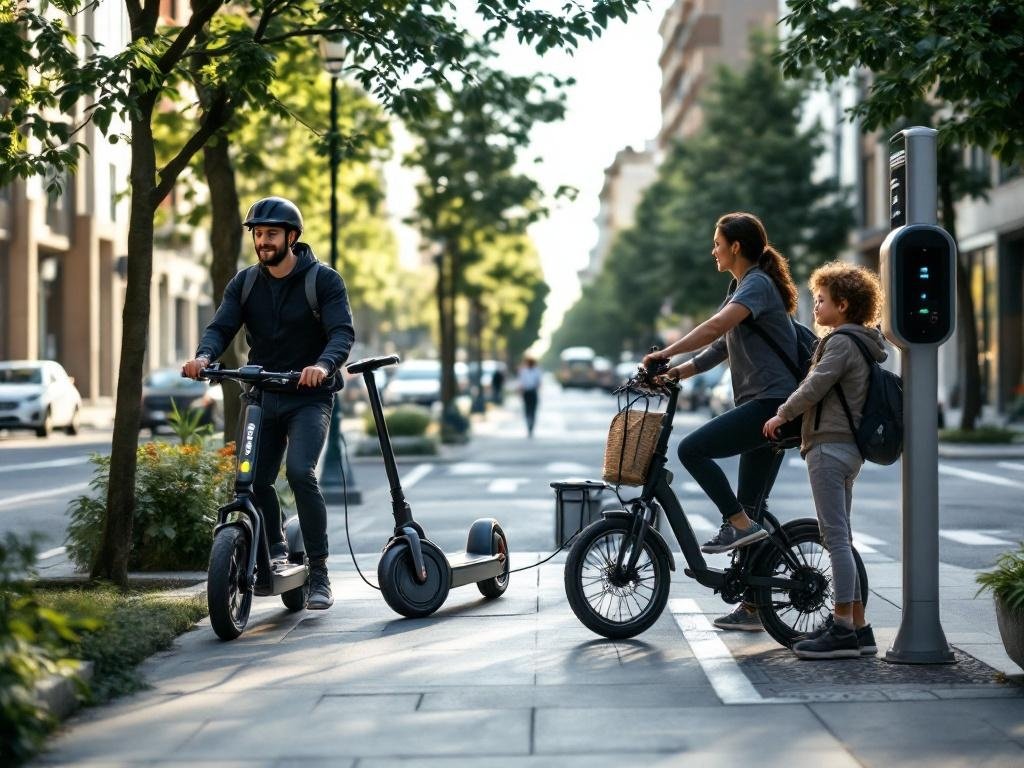
Electric scooters and electric bikes have transformed urban transport, offering efficient low‑emission options for adults and children. This guide covers types core components like batteries and chargers leading brands such as Razor Segway and GOTRAX safety and legal considerations buying tips and maintenance. Read on for practical comparisons and actionable advice to choose and care for the right e scooter or e bike.
Understanding the landscape of scooters and electric bikes
Micromobility devices such as the electric scooter and electric bike have reshaped how adults and children commute, travel around cities, and enjoy leisure, offering an accessible, efficient, and environmentally sound alternative to cars or public transport. These vehicles enable flexible door-to-door trips, support physical activity, and give children independence in a safer, speed-limited format. Both scooters and bikes—whether electric or manual—play vital roles in urban mobility, from quick jaunts to school, to robust daily commutes and recreation.
-
Manual Kick Scooters
Human-powered with no motor, these are lightweight and ideal for short trips, often topping out around 8–16 km/h (5–10 mph). Used mainly by children (razor scooter, scooter for kids) for neighborhood rides or by adults (“scooter for adults”) for last-mile transport. -
Electric Scooters (Stand-up and Seated)
Powered by a battery and motor assisted drivetrain, stand-up models dominate urban commutes for adults (“electric scooter adults”) and kids (“electric scooter for kids”), with typical speed ranges of 20–30 km/h (12–18 mph). Notable brands include Segway, Gotrax, and Razor scooter electric. Found in rental fleets and as personal vehicles. -
Electric Bikes (Pedal Assist and Throttle)
Blending manual pedaling with electric motor boost, the electric bike or scooter electric bike can reach 25–45 km/h (15–28 mph), depending on local limits and type. Use cases include urban commuting, longer-range travel, or hilly neighborhoods. Pedal assist boosts fitness while throttle models offer effortless acceleration. -
Segmented Personal Transporters (e.g., Segway style)
These self-balancing, gyroscope-based vehicles offer ranges and speeds similar to e-scooters, typically 12–20 km/h (7–12 mph). Used for campus transit, tourism, or short city hops (“segway electric scooter”).
- Range: Electric scooters typically manage 15–40 km (9–25 mi) on a single charge, while electric bikes may exceed 60 km (37 mi).
- Top Speed: E-bikes often reach 25–45 km/h (15–28 mph); e-scooters typically max out at 20–30 km/h (12–18 mph).
- Motor Power: Scooters commonly use 250W–500W motors; e-bikes range from 250W–750W.
- Average Weight and Portability: Most electric scooters for adults fold, weigh 10–18 kg (22–40 lbs), and occupy minimal storage (under a desk); e-bikes are less compact and often 20–30+ kg (44–66+ lbs).
- Storage Footprint: Scooters are easier to store in apartments/garages; bikes need more space or purpose-built racks.
- Environmental Benefits: Zero direct emissions, significantly lowered carbon footprint per km, and the ability to charge with renewable energy.
- Social Impact: Lessens city congestion, reduces noise, improves air quality, and enhances inclusive mobility especially with “electric scooters near me”.
While micromobility excels in urban and suburban environments, it is limited by local infrastructure (like bike lanes), battery range, and adverse weather which can make electric scooter and electric bike use challenging or unsafe during rain, snow, or icy conditions.
Following this overview, the next chapter will explore the technical foundation of these vehicles, from battery and motor selection, to choosing a suitable electric scooter charger—information critical whether you are narrowing down between Gotrax, Segway, or another top-rated best electric scooter for your lifestyle.
Key components batteries motors and chargers
Choosing the right internal hardware—*electric scooter battery*, motor, controller, and charger—fundamentally determines your scooter’s or e-bike’s *performance*, *range*, *safety*, and lifespan. Understanding how these key components interact allows for smarter decisions, better maintenance, and effective troubleshooting of both *adult* and *kids* models, from *razor scooter electric* to *gotrax electric scooter* and *segway scooter* products.
- Batteries
- Chemistry: Nearly all modern electric scooters and bikes use lithium-ion (Li-ion) or lithium iron phosphate (LiFePO4) batteries, greatly superior to older lead-acid types for weight, power density, and *electric scooter battery life*.
- Capacity: Expressed in watt-hours (Wh) and amp-hours (Ah)—for example, a Razor scooter may have a 250Wh battery; adult models often range from 350-700Wh. Higher Wh means greater range; expect 10-20Wh per kilometer depending on use and terrain.
- Range and Life Expectancy: The total usable range per charge directly links to Wh; deep discharges (high depth of discharge or cycling from 100% to near 0%) reduce long-term cycle life. Expect 500-1000 full cycles before *electric scooter battery replacement* is likely needed.
- Charging and Storage: Ideal practice: keep state of charge 20-80% for storage, avoid regular deep or full charges unless needed for immediate use, and store at moderate temperatures to minimize failure modes like swelling, sudden voltage drop, and irreversible cell degradation.
- Chargers and Charging
- Charger Ratings: Specified in volts, amps, and overall watts (e.g., 42V, 2A typical for many electric scooter battery charger units). Matching charger voltage exactly to your scooter’s needs is vital for safety and battery health.
- Connectors and Compatibility: Scooters and e-bikes use proprietary and standardized connectors; always check compatibility before purchasing a replacement or traveling. An electric scooter charger for Razor may not fit GOTRAX or Segway models.
- Charge Times: Typical full charge times: kids scooters 2-4 hours, adult scooters 4-8 hours, e-bikes 3-6 hours depending on battery size and charger amperage output.
- Safety: Look for chargers and vehicle systems with a Battery Management System (BMS) for cell balancing, overcurrent, overvoltage, and thermal cut-off. Never use unverified third-party chargers—OEM units are calibrated for your battery.
- Tips: At home, use only certified outlets and avoid daisy chaining power strips. Public charging is emerging in urban micromobility hubs; always bring your own compatible charger for reliability.
- Motors and Drivetrain
- Hub vs Mid-drive: Scooters and compact e-bikes favor hub motors for simplicity, low noise, and minimal maintenance; mid-drives offer improved hill climbing and efficiency in pedal e-bikes.
- Power Ratings: Entry-level scooters often feature 250-350W motors suitable for flat urban commuting; adult performance or “best electric scooter” options can reach 500-1000W, critical for acceleration and grades.
- Controller Role: This dedicated circuit manages battery-to-motor power distribution, throttle response, and sometimes regen braking (energy recovery when braking downhill or decelerating).
- Practical Troubleshooting
- Won’t Charge: Test with a second OEM charger if available; inspect connections and power source before suspecting a full battery failure.
- Low Range/Sudden Drop: Could be due to old or poorly charged *electric scooter battery*, low temperatures, or cell damage; check *state of charge* and inspect for swelling.
- Overheating: Common in old batteries or overloaded motors/controllers—stop use immediately and allow cool-down; never charge a hot battery.
- Key specs for comparison:
- Motor Power: 250W / 350W / 500W+
- Top Speed: 15 km/h (kids) – 45 km/h (adults)
- Range: 10-80 km
- Battery Capacity: 200Wh – 700Wh
- Charger Voltage: 36V / 42V / 48V
- Charge Time: 2-8 hours
- Portability: Folded dimensions, total weight (e.g., 12-18 kg for most adult scooters)
Selecting optimal components—prioritizing quality *electric scooter batteries* and chargers, reliable motors, and robust controllers—should be a chief criteria when reviewing brands and specific models, all detailed in the following chapter with examples from Segway, GOTRAX, and Razor product lines.
Brands models and where to buy
Manufacturers play a pivotal role in your electric scooter or e-bike experience, influencing not just initial quality but also long-term support. Trusted brands are crucial for access to warranty coverage, replacement parts, and crucial software updates—often the difference between hassle-free commuting and frustrating downtime. Recognizing key players within adult and kids segments can help you select a ride that truly matches your needs while simplifying future care.
- Razor: Mainly designs for kids and young teens, with some adult-friendly models. Razor scooter electric lines offer accessible starter models; the brand is known for approachable pricing and broad availability. Price bracket: $150–$400 (kids), up to $600 (adults). Example: Razor E100 (kids), EcoSmart Metro (adults). Strengths: simplicity and easy part sourcing.
- Segway (Ninebot): Focuses on urban commuters and adults, but offers kid versions. Segway scooter and Segway electric scooter models stand out for high build quality, robust app integration, and safety features. Price bracket: $250 (kids) – $1000+ (adult commuting). Example: Segway Ninebot Max. Notable for tech sophistication and hill climbing.
- GOTRAX: Covers kids through adults, specializing in value-driven options. GOTRAX electric scooter models excel at balancing features and affordability. Price bracket: $190–$800. Example: GOTRAX GXL V2 (adult commuter). Strengths: budget friendly, mainstream specs, strong U.S. presence.
- Other Categories: Commuter mainstays (e.g., Xiaomi), budget D2C brands (Hiboy, Turboant), and premium performance lines (Apollo, Dualtron)—these offer broader speed/range for enthusiasts or heavy-duty use.
- Official manufacturer stores: Best for authentic warranty and parts; limited discounts.
- Big box retailers: Easy returns and in-store pickup; limited selection.
- Specialty micromobility shops/local dealers: Hands-on demos, expert setup, and advice; prices may be higher.
- Marketplaces (used): Cheapest, widest range—inspect battery health, brake wear, frame damage, and test for odd noises or evidence of repairs before purchase. Search “electric scooter near me” for local listings and always check for legal charger and warranty info.
- Purpose fit (commuting, leisure, off-road, kids)
- Weight/age ratings and max load
- Warranty and reputation for support (e.g., Razor, GOTRAX, Segway)
- Local repair/parts access
- Charger compatibility (voltage, plug type) and electric scooter charger availability
- Essential accessories: helmet, lock, lights, bell, protective wear
- Best electric scooter for commuting: Segway Ninebot Max—robust, long-range, suits daily roads and moderate hills.
- Best electric scooter for kids: Razor scooter electric lines (E100–E200): safe speed, reliability for young users.
- Best budget adult scooter: GOTRAX GXL V2—solid entry-level for moderate urban distances, accessible price.
- Best folding e-bike: Look for Dahon or Lectric XP 3.0—compact and light, built for mixed commutes.
- Best electric scooter for hills: Segway scooter from the Ninebot Max family; high torque motor and mechanical brakes for control.
- Try local shops (“electric scooter near me”) to demo ride before buying
- Carefully interpret online reviews for genuine user experience, focusing on warranty, parts, and battery issues
- Compare spec sheets on range, motor power, weight, and portability. Don’t overlook local support and legal feature requirements.
Careful comparison of brands and purchasing channels positions you for a reliable ownership experience—next, ensure your choice ticks all safety and legal boxes for every member of your household.
Safety regulations and choosing the right model for kids and adults
Choosing the right electric scooter or electric bike involves much more than features and looks—**safety and legal compliance are top priorities** for adults and kids alike. Local laws and regulations directly impact not only which scooter electric for adults or children you’re allowed to ride, but also where and how you can safely operate electric scooters and e bikes. These rules shape your options for age-appropriate models, necessary gear, and where your new GOTRAX electric scooter or Segway electric scooter can be used without risking fines or accidents.
- Motor power and speed limits: Many municipalities restrict motor wattage (commonly 250-750W) and speeds (often capped at 15-20 mph for public path use).
- Helmet laws: Helmet requirements for scooters and e bikes often vary by rider age and class of vehicle; always check local standards.
- Legal age to ride: Some areas require riders of scooter electric models to be 16+ or limit children’s models in public spaces.
- Type classification: Rules differ for vehicles classified as scooters, e bikes, standard bikes, or mopeds—these affect where each can be ridden and may call for insurance or registration.
- Kids: Electric scooter for kids typically have 7-10 mph speed limits, lower weight thresholds (often under 120 lbs), and non-adjustable handlebars for safety. Look at Razor scooter lines built specifically for younger users.
- Teens and adults: Scooters for adults or e bikes offer higher speeds, robust brakes, and support up to 220 lbs or more. Brands like Segway and GOTRAX focus their scooter electric for adults lines on weight and speed compatible with grown-up use.
- Locking and mounting: Choose electric scooters with secure locking points and reflect on mounting height appropriate for the primary rider.
- Always follow manufacturer guidelines for age, weight, and usage terrain; never bypass limiters for kids’ models.
- Helmet (CPSC, EN1078 or similar): Fit snugly, not tilting, straps flat against cheeks.
- Reflective vest or clothing: Essential for early mornings, dusk, or night.
- Front and rear lights: Required for many scooter electric for adults in public spaces; check battery before every ride.
- Protective gloves and knee/elbow pads: Mandatory for kids, advisable for fast adult e bikes.
- Beginner instruction: New riders (all ages) should practice braking and emergency stops in safe areas before joining traffic.
- Use bike lanes or marked paths: Avoid sidewalks and pedestrian-only spaces unless explicitly allowed.
- Be weather aware: On any electric scooter for kids or adults, avoid riding in heavy rain; wet brakes and slick tires are hazardous.
- Park thoughtfully: Leave your scooter or e bike where it will not obstruct others or risk being towed.
- Check tires and brakes before every trip.
Scooters and e bikes often fall under unique liability rules—some jurisdictions require insurance or impose strict at-fault penalties in shared spaces. After any incident, immediately document the situation, photograph damages, exchange contact details if others are involved, and call local emergency services if necessary.
- Stop and check for injuries (self and others); get clear of traffic if safe.
- Take photos of all vehicles, damage, and surroundings.
- Contact emergency services when required.
- Report the accident to your insurer and (if applicable) local authorities.
Above all, always review local requirements and demo several devices—ensuring the best electric scooter, bike, or Razor scooter chosen is safe, compliant, and tailored to the experience and age of every rider.
Maintenance best practices and future trends
Maintaining your electric scooter or electric bike is crucial to maximizing performance, ensuring safety, and preserving long-term value—no matter if you ride a Razor scooter electric, a Gotrax electric scooter, or a Segway electric scooter. Regular care not only extends the lifetime of your e-bike or best electric scooter, but is also key to preserving range, responsiveness, and the safety of both adults and kids.
- Daily pre-ride checks:
- Tire inflation and integrity: Squeeze to ensure tires are firm and free of visible damage.
- Brake function: Squeeze levers and check immediate cable or disc engagement.
- Light and horn operation: Confirm all lights, indicators, and audible signals work before departure.
- Weekly and monthly tasks:
- Tire pressure: Use a gauge to match specs for your scooter electric for adults or electric scooter for kids.
- Chain, belt, or drive inspection: Check for correct tension and lubricate moving parts as needed.
- Firmware/software updates: For Segway and Gotrax scooter models, check and apply any available OTA updates.
- Seasonal battery care:
- Charge the electric scooter battery to 70-80% before extended storage; store in a cool, dry location.
- Every 1-2 months, refresh with a partial charging cycle to avoid deep discharge.
- Troubleshooting steps:
- No power: Confirm the battery is charged, cables are securely plugged, and check the fuse. If the electric scooter charger doesn’t show charging lights, try a spare if you have one.
- Diminished range: Inspect tire pressure, check for dragging brakes, and recalibrate the battery if possible. Persistent range loss may signal a battery replacement need.
- Unusual noises: Listen for loose bolts, debris between wheels, or worn bearings, tighten and clean as needed.
- Charging faults: Clean charger and battery contacts, test with another charger, and look for error indicators on smart dashboards.
- Seek professional repair for unresolved faults, significant electrical issues, or software errors after DIY checks.
- Spare parts to keep on hand:
- Inner tubes and tire patch kits for quick flats.
- Additional chargers to prevent downtime.
- Replacement fuses compatible with your brand (Razor, Gotrax, Segway, etc.).
- Exercise caution with electric scooter battery replacements; improperly handled lithium batteries can be hazardous—always recycle old batteries at certified e-waste centers.
- Emerging trends influencing purchases:
- Improved battery technology: Next-generation higher capacity and solid-state batteries promise longer range and quicker charging cycles.
- Docking and ride-share integration: Models designed for smart city infrastructure are increasing in prevalence.
- Over-the-air firmware upgrades: Enhanced diagnostics and tweakable performance are now standard on smart scooters and e-bikes.
- Better sensors for safety, theft prevention, and rider customization.
- Maximizing resale value:
- Document all service and maintenance performed.
- Retain the original electric scooter charger, user manuals, and packaging.
- Photograph the vehicle regularly to demonstrate condition at sale.
- Environmental best practices:
- At end-of-life, never discard electric scooter batteries in trash; use certified local e-waste or battery recycling programs.
- Consult dealers or battery manufacturers for approved drop-off locations.
By making routine electric scooter and electric bike maintenance a habit—especially regular care of your battery, tires, and electric scooter charger—you ensure your scooter electric for adults or kids delivers peak safety, value, and reliability every ride.
Conclusions
Choosing between electric scooters and e bikes depends on purpose local regulations and technical factors such as motor power and battery capacity. Prioritize safety charger compatibility and reputable models from brands like Razor Segway and GOTRAX. Regular maintenance and correct charging extend life and performance. Use this guide to compare models find local sellers and make an informed sustainable choice that fits your commute and lifestyle.