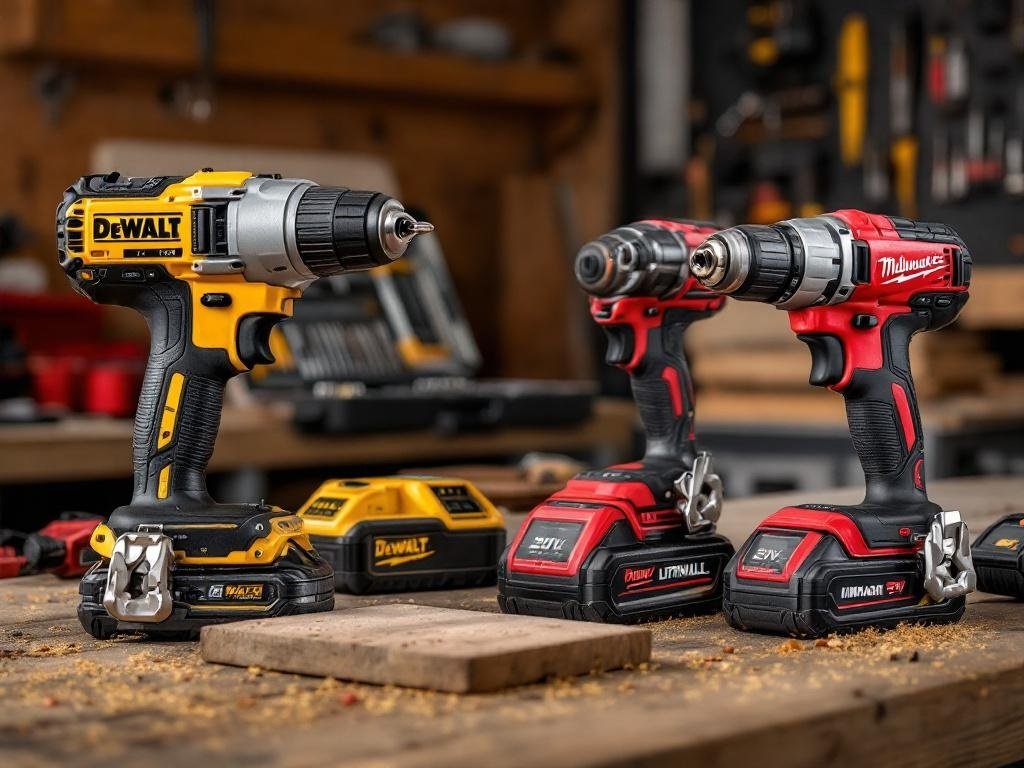
From DIY projects to professional construction, cordless drills and hammer drills are essential. This guide examines DeWalt and Milwaukee offerings, compares cordless drill types including impact and hammer drills, explains battery technologies like 20V lithium-ion, and helps choose the best cordless drill or drill set. Read on for practical buying, maintenance, and performance tips to reliably match tools to tasks.
Understanding Cordless Drill Types and How They Work
Understanding the full range of cordless drill types is key to picking the right tool for your project. Here’s how these common models work—plus when and why to reach for each:
- Cordless Drill Driver: A drill driver combines basic drilling and screwdriving. The adjustable clutch lets you match the tool’s torque to your fastener and material. For DIYers, this is often the best cordless drill for all-around home tasks.
- Cordless Drill Driver: A drill driver combines basic drilling and screwdriving. The adjustable clutch lets you match the tool’s torque to your fastener and material. For DIYers, this is often the best cordless drill for all-around home tasks.
- Hammer Drill Cordless (Percussion Drill): Hammer drills look like standard drills but add a hammering or percussion function that pounds the drill bit axially as it spins. This hammering action—measured in blows per minute (BPM)—helps penetrate masonry, brick, and concrete with less effort. With this setting off, it functions as a regular cordless drill.
- Impact Cordless Drill (Impact Driver): Unlike hammer drills, impact drivers don’t have a percussion mode for masonry. Instead, they use a spring-loaded hammer and anvil mechanism to deliver sudden bursts of high torque rotational force—measured in impacts per minute (IPM). This makes them superior for heavy-duty screwdriving, lag bolts, and nut driving in wood or metal. An impact drill also reduces wrist strain.
- Power Drill: This is a broad term that covers all electric drills, whether corded or cordless. If you see “power drill cordless,” understand it can refer to any of the above battery-operated variants.
Key Specs and What They Mean:
- Torque: Measured in Nm or in-lb, higher torque allows for drilling larger holes and driving bigger fasteners.
- RPM (No-Load Speed): Higher RPM is best for drilling small holes; lower RPM and higher torque is better for driving screws.
- BPM/IPM: For hammer drills and impact drivers, these metrics show frequency of hammer blows or impacts, crucial for hard materials.
- Chuck Size: E.g., 1/4”, 3/8”, 1/2”—this determines the bit shank sizes your drill can accept.
Troubleshooting Quick Tips:
- Bit slipping: Use a drill with a higher-quality chuck or check for proper bit insertion.
- Overheating: Choose an impact cordless drill or hammer drill cordless for demanding tasks; allow the tool to cool.
- Insufficient torque: Opt for a drill/driver with higher torque rating, or use an impact driver for large fasteners.
Battery Technology Performance and What 20V Really Means
Cordless drill battery technology drives modern power drill cordless performance, with lithium-ion cells now supplanting previous nickel-cadmium (NiCd) and nickel-metal hydride (NiMH) chemistries.
- Lithium-ion (Li-ion): Dominates today due to high energy density, lightweight design, and minimal memory effect. Compared to NiCd/NiMH, Li-ion delivers more consistent voltage, faster charging, lower self-discharge, and superior lifespan over hundreds of cycles. Downsides are higher cost and susceptibility to damage from deep discharge.
- NiCd/NiMH (Older): Heavier and bulkier for the same energy output. Notably slower charge times and develop “memory effect”—reducing usable runtime unless periodically cycled. Rare in new cordless drill sets or 20V cordless drill systems.
Understanding Voltage Ratings:
- In North America, “20V Max” (marketing voltage) and “18V” (nominal voltage) often refer to the same pack—built from five 3.6V Li-ion cells in series (5×3.6V=18V nominal, 20V freshly charged). Both deliver similar power; key is brand compatibility rather than the label.
- Higher voltage implies more power potential and torque for demanding tasks. However, amperage (Ah) ultimately defines runtime at those voltages: 2.0Ah packs for light work and portability, 5.0Ah+ for extended sessions.
Amp-Hour (Ah) and Energy Capacity:
- Ah measures charge storage; doubling it nearly doubles runtime but increases pack weight. Example: A 2.0Ah cordless drill battery is smaller and lighter for driving screws, while a 5.0Ah pack gives a hammer drill cordless hours of drilling in concrete without a swap.
- Balance needs: More runtime means more weight!
Motor Technology Impact:
- Brushless motors outperform brushed by reducing internal friction and wear, driving efficiency gains (up to 50% longer runtime per charge), cooler operation, and virtually no brush replacement. Brushless is now standard in many premium best cordless drill options.
Charging Systems and Battery Care:
- Fast chargers cut recharge time substantially, but generate more heat. Advanced packs incorporate battery management electronics (BMS) with temperature sensors and cell balancing for safety and longevity.
- Best practices:
- Avoid deep discharges (run to empty); recharge before the tool cuts out.
- Store packs at partial charge if unused for weeks or months.
- Keep batteries cool and dry—never bake them in a truck or leave in freezing sheds.
- Use only manufacturer-recommended chargers to preserve warranty and safety.
Buying Guidance:
- Choose battery size (Ah) based on work type—lightweight for driving, high-capacity for drilling or extended use.
- Verify charger compatibility and look for fast-charging models if downtime matters.
- Within a brand, stick to a single 20V cordless drill battery platform for interchangeability—powering impact drivers, hammer drills, saws, and more without extra investment in packs and chargers.
DeWalt Versus Milwaukee Ecosystems and Product Strengths
DeWalt and Milwaukee stand as dominant players in the cordless drill market, each leveraging sizable ecosystems designed around professional and demanding DIY users.
- DeWalt has built a reputation for reliable, rugged construction and a vast 20V MAX battery system that covers hundreds of tools. Their platform appeals broadly to both jobsite professionals and serious hobbyists, offering excellent ergonomics, strong U.S.-based support, and an expansive accessory lineup. The brand’s warranty (typically 3 years with service and 1 year free maintenance) and extensive service network boost long-term value.
- Milwaukee emphasizes innovation and heavy-duty jobsite performance, with the M18 (18V) battery platform covering over 200 tools, tightly integrated Packout storage, and distinct professional orientation. Noted for premium build quality, Milwaukee drills and impact tools push power and durability, often at a higher price point. Their robust 5-year tool warranty and growing service center footprint attract trade users seeking longevity.
Comparing cordless drill lines:
- DeWalt’s 20V MAX and Milwaukee’s M18 Lithium batteries are both industry standards, with virtually identical nominal voltage but branding differences. Packs are not cross-compatible, so ecosystem choice is crucial for battery sharing across cordless tools.
- Both brands offer clear product tiers:
- Consumer: Compact, affordable cordless drill drivers (DeWalt DCD771C2, Milwaukee M18 Compact Drill/Driver).
- Prosumer/Light trade: Higher runtime and brushless motors (DeWalt XR series, Milwaukee M18 Fuel).
- Professional: Heavy-duty hammer drills and high-torque impact drivers, advanced electronics, metal chucks, dustproofing.
- Milwaukee leads in flagship power and specialty brushless motors; DeWalt focuses on balance and tool breadth, especially multi-voltage compatibility (FLEXVOLT tools accept both 20V and 60V packs).
Hammer drill and impact driver comparison:
- Both offer high-performance hammer drill cordless and impact offerings. Milwaukee often edges out in torque and sustained heavy-load abilities (e.g., M18 FUEL Hammer Drill); DeWalt shines in compact size-to-power ratio.
- Accessory systems (SDS, keyless chucks) are robust on both platforms, with Milwaukee favored for SDS rotary hammers and DeWalt for accessory availability in big-box retail channels.
- Durability in harsh use is a hallmark of both brands, though Milwaukee’s reputation edges slightly ahead in the heaviest trade environments.
Warranty, service, and real-world usability:
- Milwaukee’s 5-year warranty is industry-leading; DeWalt’s service coverage is excellent, but longer warranty appeals to many.
- Resale values are strong for both, with Milwaukee retaining a slight premium in used marketplaces.
- Battery and charger interchangeability only exist within each brand. Choose based on what future tools you may need; platform lock-in is a real financial and workflow issue.
Decision matrix for buyers:
- Weekend DIY: Either brand; DeWalt excels in value and mainstream availability.
- Prosumer/Shop: DeWalt XR for breadth, Milwaukee for high runtime and kit expansion.
- Trade Professional: Milwaukee M18 FUEL for top-end power and service; DeWalt FLEXVOLT for flexibility and compact size.
- Rental/Fleet: Milwaukee for warranty and modular tool tracking (ONE-KEY system).
How to Choose the Best Cordless Drill and the Right Drill Set
Selecting the best cordless drill and the right cordless drill set requires matching tool capabilities to your actual job needs. Start by defining core buying goals:
- Use Case: Drilling softwoods, metals, masonry, or do you need driving power for long screws or lags?
- Frequency of Use: Occasional DIY repairs or daily trade work?
- Required Torque: Heavier builds require more torque and tougher gearboxes.
- Material Types: Masonry, hardwood, and metal each demand distinct features.
- Portability: Will weight, size, or battery runtime matter most for your workflow?
- Budget: Quality pays off long-term, but kits can optimize value at every price point.
Build your comparison around this decision checklist, prioritizing:
- Voltage class (20V/18V for power; 12V for compact jobs)
- Battery Ah (higher = longer runtime; 2.0 for home, 5.0+ for pros)
- Brushless motor (for efficiency, power, and longevity)
- Torque rating and max speed
- Speed settings/gearbox (2 vs. 3+ speeds or variable dial)
- Chuck type/size (½″ keyless for versatility; SDS for heavy hammering)
- Weight and grip ergonomics
- Kit accessories (bits, extra batteries, cases, impact drivers)
- Warranty coverage
Choose based on your user profile:
- DIY Homeowner: 20V 2Ah cordless drill driver + 1 battery + charger + 50-piece bit set
- Renovator: 20V 4Ah power drill cordless + spare battery + charger + comprehensive drill set
- Trade Professional: Brushless 20V hammer drill + 5.0Ah batteries + impact cordless drill + tough case + impact-rated bits (wood/metal/masonry)
Expect a quality cordless drill set to include a rugged case, at least two batteries, charger, wood/metal/masonry bits, driver bits, and often an impact drill or driver. Buying as a kit generally saves money and ensures battery/charger compatibility versus piecing together bare tools and separate batteries.
Test drills in-store for comfort, balance, trigger feel, and chuck operation. When buying online, check return policies, scrutinize torque/weight/runtime specs, and consult actual user reviews for real-world impressions. These steps will keep you focused on the best drill for your specific needs and maximize satisfaction with your new cordless drill set.
Maintenance, Accessories, and Maximizing Tool Lifespan
Proper care and informed accessory choices are central to getting the most out of your cordless drill, hammer drill cordless, or impact drill—whether you’ve invested in a DeWalt drill, Milwaukee cordless drill, or any premium cordless drill set. Routine maintenance starts with keeping each tool, particularly the chuck and ventilation slots, free of dust and debris. Use a soft brush to clean the housing after each use and inspect drill bits for dullness or damage, replacing as needed to avoid excessive motor strain. Periodically open and close the chuck without a bit inserted to ensure smooth operation, and, for models allowing it, apply a light drop of oil to moving parts per the manual. Avoid sustained high-load drilling to prevent both overheating and premature wear; allow the tool to rest if it feels hot to the touch.
For your cordless drill battery, always use the supplied charger, avoiding fast chargers unless recommended by the manufacturer. Charge batteries only at room temperature—never when cold or excessively hot—and store packs partially charged in a dry, moderate environment. Prevent deep discharges by recharging before fully drained; repeated deep cycles shorten lithium-ion lifespan. If you notice rapid loss of charge or heating, the pack may have reached end-of-life.
Select accessories that boost capability, such as high-speed steel or carbide bits for wood, masonry, or metal, depending on your job. When using an impact drill, use impact-rated bits and sockets only. SDS-plus chucks deliver superior power for heavy masonry with hammer drills, while keyed chucks can maximize grip for larger bits. Right-angle adapters allow working in tight spaces; depth stops and adjustable clutch settings protect both bit and material.
If your power drill or hammer shows excessive arcing, abnormal noise, or runs intermittently, check for replaceable brushes, but pro servicing or warranty repair is often the best route for major faults. Evaluate warranty coverage for both tool and battery, especially for pro-level kits from DeWalt or Milwaukee, before committing to repairs or upgrades.
For safety and workflow, always wear eyewear and dust masks when using a hammer in masonry. Maintain a tidy, compartmentalized case for your drill set and bits to minimize damage and lost time. Use labeled organizers for small accessories and regularly check all PPE.
- Preventive Actions: Clean all components after use; recharge batteries before low discharge; inspect, rotate, and replace bits often; let motors cool between tasks; store in a dry, temperature-stable location.
- Recommended Accessories: Premium drill bit set for varied materials, impact-rated bits, right-angle adapter, depth stop, additional battery, and sturdy organizer case for your cordless drill driver or impact cordless drill.
Conclusions
Choosing the right cordless drill balances power, battery, and application. DeWalt and Milwaukee both deliver robust 20V/18V-class lithium-ion systems across hammer, impact, and drill driver lines. Prioritize torque, battery runtime, and an ecosystem of batteries and accessories when picking the best cordless drill or drill set. With proper maintenance and right bits, a quality cordless drill becomes workshop cornerstone.