

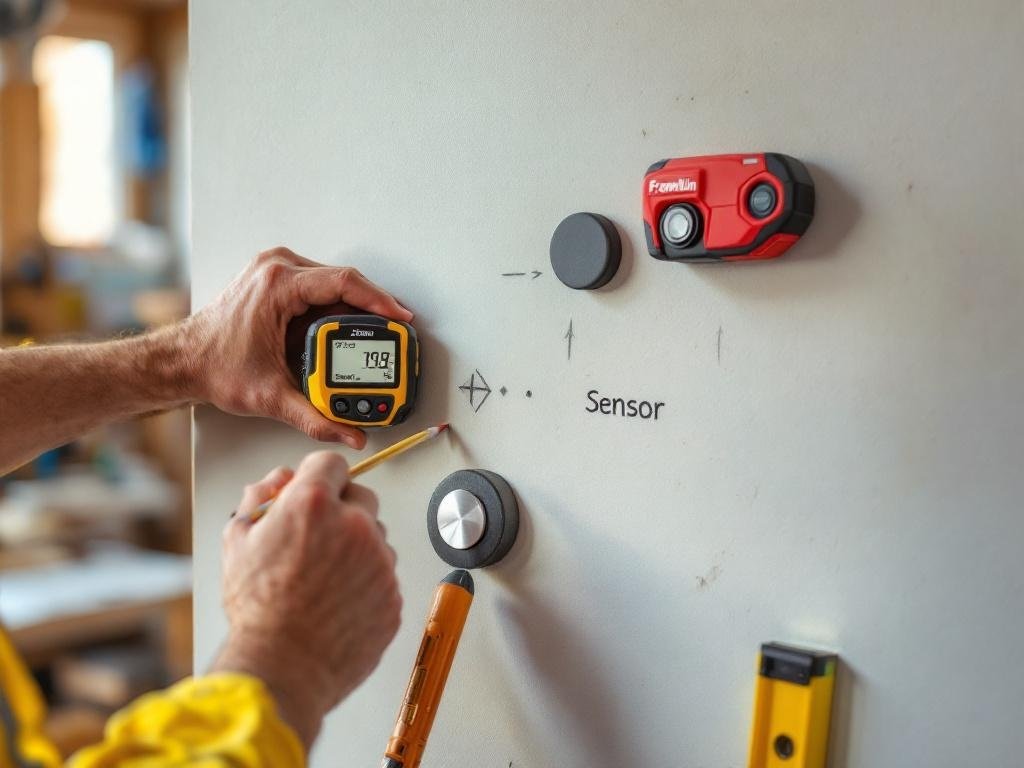
Stud finders are essential tools for safe and precise wall work. This article explains how stud finders work, compares Zircon electronic sensors and Franklin magnetic sensors, and gives detailed, practical instructions for using Zircon models and choosing the right device for different walls and projects. Expect troubleshooting tips, safety reminders, and buying guidance.
How stud finders work and types explained
A stud finder is a handheld tool designed to locate framing studs or other hidden objects within walls, enabling users to safely and efficiently hang objects, mount hardware, or perform renovations. The core principle behind stud finder technology is the detection of differences within wall materials—either by physical means or electronic sensing—helping users determine what’s hidden behind gypsum, plaster, or paneling.
- Magnetic (Passive) Stud Finders:
- Advantages: No batteries required; simple operation; inexpensive; detects metal fasteners (nails/screws) used in both wooden and metal studs; long lifespan.
- Limitations: Less accurate at locating stud centers; must move slowly and closely over the wall; only detects ferrous metal; can miss non-magnetic metal studs; not effective with thick wall coverings or deeply buried fasteners.
- Electronic (Active) Stud Finders:
- Advantages: Higher accuracy through sensing wall density changes; can detect wood and metal studs directly; many models show stud edges and centers; some also detect live AC wiring and deep objects. Zircon stud sensors and Franklin stud sensors fall into this category, offering variable sensitivity and detection modes.
- Limitations: Require batteries; sometimes false positives (especially near wiring or wall irregularities); some less reliable on highly textured or thick walls; must be calibrated before use; may be pricier than magnetic models.
- Advanced Radar/Thermal Stud Finders:
- Note: Rare in household use, these use radar or thermal imaging to visualize in-wall structures. They offer superior depth and object identification, but are expensive and generally reserved for professional applications.
Typical detection targets for all stud finders include: wood studs, metal studs, drywall nails or screws, as well as utility pipes and live electrical wiring. When using a Zircon stud sensor or Franklin stud finder around electrical lines, always prioritize safety by acknowledging indications of live wiring before drilling, nailing, or cutting into walls.
- Confirm the wall material type: drywall, plaster, paneling, or specialty surface.
- Ensure batteries are fully powered and properly installed in electronic stud finders like your zircon stud finder or franklin stud sensor.
- Calibrate your stud finder—or reset it—according to manufacturer instructions before each scan zone.
- Plan a systematic scan pattern across the target area for thorough coverage.
Understanding Zircon stud finders and study of Zircon sensors
Zircon stud finders represent a widely adopted class of electronic stud sensors, designed for more accurate results than simple magnetic styles. As electronic units, Zircon stud finders use sensing plates to gauge subtle changes in wall density—enabling detection of hidden objects such as wood or metal studs. These devices fit firmly into the electronic sensor group, relying on capacitive sensing to identify edges or centers of studs by detecting variations in the dielectric properties of building materials as you move the device across the surface.
- Center-finding capability: Many Zircon stud sensors are built to locate not just the stud edge but the actual center, improving reliability when mounting heavy items. Some models even indicate both edges for easier marking.
- Deep Scan modes: Useful for thicker walls—selectable ‘deep’ scans enable the stud finder to penetrate further, but may slightly reduce accuracy or increase false positives if not used thoughtfully.
- Live AC detection: Integrated electrical warning features help alert you to the presence of live wires, helping to prevent accidental drilling or nailing into cables.
- Display options: Zircon stud finders may use LED lights, LCD screens, or audible signals to communicate stud location, strength of detection, and warnings.
- Calibration steps: Proper use involves placing the zircon stud finder flat on the wall, pressing and holding the calibration button until a signal (light/beep) confirms readiness, then beginning the scan.
- Best results are typically achieved on standard drywall; performance may decrease with older plaster-and-lath, heavily veneered surfaces, or walls containing foil-backed insulation.
- For improved accuracy, move slowly and steadily; overlapping passes can help reveal consistent stud lines.
- Marking multiple points along a stud line reduces measurement error, particularly when spacing is inconsistent or the wall has hidden obstructions.
- If your zircon stud finder gives repeated false positives, ensure full contact with the wall, recalibrate on a known empty section, and avoid starting scans near electrical outlets or metal corners.
- Check battery power, as low voltage may cause erratic readings or weak detection.
- If scanning exotic materials, refer to the user guide for setting adjustments or limitations.
Understanding both the sensing technology and the operational best practices of a zircon stud sensor is key for dependable, repeatable results. Users who take time to master the finer points of zircon stud finder how to use techniques will achieve greater confidence and accuracy with every scan.
Franklin magnetic sensors and when magnets outperform electronics
Franklin-style magnetic stud sensors are unique among stud finder tools, using powerful rare-earth magnets to directly sense the magnetic pull from steel fasteners (screws, nails) anchoring wall finishes to framing, rather than relying on electronic means. These stud finders do not require batteries or calibration; instead, they alert you physically—either via a noticeable tug or a visible swing—when a metal fastener is detected behind drywall or plaster. Unlike electronic sensors, the Franklin stud finder and similar magnetic devices respond only to metal objects, making them immune to false readings from density changes, insulation, or wiring.
Magnetic stud finders, including the Franklin stud sensor, can actually outperform electronics in several specific scenarios:
- No batteries required: Always functional, ideal for rarely used toolkits or job sites where power is a concern.
- Penetrate multiple wall layers: Capable of detecting screws or nails even behind thick tile, paneling, or multiple sheets of drywall, where density-based units struggle.
- Immune to wall material inconsistencies: Not affected by variations in wall density from patches, paint, or wallpaper.
- Practical longevity: With no electronic parts to fail, a magnetic stud finder can last decades.
Comparing magnetic and electronic stud finders:
- Pros (Magnetic):
- Never needs batteries
- Excellent for finding actual fasteners (not just stud location guesses)
- Unaffected by wall composition, moisture, or paint
- Cons (Magnetic):
- Dependent on screw/nail size and proximity—misses studs with few or deeply recessed fasteners
- Cannot directly detect wood studs or support members without fasteners
- Can be confused by stray metal (corner bead, electrical boxes, pipes nearby)
- Difficult to use with steel framing—magnet is attracted everywhere
Effective scanning technique:
- Hold the Franklin stud finder flat and move it slowly in broad, horizontal sweeps.
- Pause when the magnet pulls or attracts, then move vertically to find multiple fasteners at stud intervals.
- Mark several fastener locations in a vertical line; connecting these helps define the stud’s position and spacing.
- To accurately map stud center: locate and mark at least two fasteners vertically, then estimate the stud’s width by their alignment.
Recommended uses:
- Quick battery-free checks for studs (especially in older homes)
- Trim carpentry where pinpoint fastener location is critical
- Verifying stud finder (electronic) results or supplementing electronic tools when wall material is problematic
With a Franklin stud finder or any magnetic stud sensor, use patience and broad sweeps for the most reliable results, especially when visual accuracy and non-powered operation are needed.
Step by step how to use a Zircon stud finder effectively
Before using a Zircon-style electronic stud finder, ensure your device is ready, the batteries are fresh, and your wall surface is accessible, clean, and free of debris.
- Prepare the work area: Remove pictures, shelves, or electrical devices from the scanning area. Lightly clean the wall to eliminate dust that might hinder smooth movement of the zircon stud sensor.
- Power on & calibrate the Zircon stud finder: Hold the unit flat against a section of wall you suspect is “empty” (no studs, pipes, or wiring). Press and hold the power or scan button. Wait for the indicator or beep that indicates successful calibration—without this, the zircon stud finder can deliver unreliable results.
- Slow, overlapping sweeps: Move the stud finder horizontally, at a slow, even pace. For accuracy, overlap each scan along the same section of wall by a few inches. This helps counter false readings from voids or dense spots.
- Select scanning mode: If your zircon stud sensor features center-find or edge-find functions, choose the desired option. Center-find displays the absolute center of the stud, while edge-detection marks each stud side. For thick walls, use the ‘deep scan’ setting if available.
- Mark the wall: When the device’s display or beep indicates a stud edge or center, mark it with a small pencil line. For higher confidence, reverse direction and scan the same section a second time to confirm the location.
- Vertical sweeps for confirmation: Run the stud finder up and down around your marks. Consistent readings confirm you have located the stud; irregularities might mean non-standard framing or obstacles behind the wall.
- Detecting live AC wiring: If your zircon stud finder how to use guide or model supports AC warning, pay close attention: if the device indicates AC current, immediately stop drilling or nailing. Confirm with a dedicated voltage tester and avoid the area to prevent electric shock.
Troubleshooting common issues:
- Inconsistent readings: Recalibrate the zircon stud finder on an “empty” area. Try fresh batteries.
- Plaster/lathe or textured wall interference: Switch to ‘deep scan’ mode, use slow overlapping passes, and check with a magnetic stud finder for confirmation.
- False stud edges or very wide readings: Calibrate again, avoid scanning over anything metal or electrical, and use the edge-find mode to cross-check. If still unsure, confirm with a tiny, shallow pilot hole.
Maintenance and storage:
- Always store the zircon stud sensor in a dry, protected location away from extreme temperatures.
- Remove batteries during long-term storage to prevent corrosion.
- Wipe the contact surface clean after use to keep the sensors free of dust and build-up for accurate scanning every time.
Choosing the right tool and combining Franklin and Zircon for best results
When choosing a stud finder, consider key decision factors: wall type (drywall, plaster, tile), your project needs (simple trim vs heavy wall mounts), whether live-wire detection is essential for safety, and if you prefer battery-free operation or advanced electronic features.
- For unknown wall construction or plaster surfaces: A Franklin stud finder is ideal as its wide sensor area can often work better where electronic edge finders struggle.
- For locating wood vs metal studs: Zircon electronic models with mode selection allow discrimination between wood, metal, and even AC wires.
- For critical safety (AC wire detection): Choose a Zircon stud sensor with built-in live-wire detection. This adds a crucial layer of safety when hanging objects around switches and outlets.
- For battery-free, fast checks: Opt for a Franklin magnetic stud finder.
- For repeated use in dim areas: Prioritize digital displays and backlighting (advanced Zircon models).
Combining methods yields the most reliable outcome:
- First, use a Zircon electronic stud finder to identify center lines and scan for AC wiring. Carefully calibrate and scan vertically and horizontally, utilizing any deep scan or metal modes appropriate to your wall composition.
- Next, verify suspected stud locations with a Franklin magnetic stud finder. Confirm strong attraction at the marked centers—this checks for real fasteners behind the wall, reducing false readings from pipes or voids.
- If in doubt, alternate between electronic and magnetic tools across different wall areas for consistent results.
Prioritized buying checklist:
- Must-have: AC/live wire detection, wood/metal stud modes, clear calibration process
- Nice-to-have: Digital or backlit screen, auto depth calibration, sturdy build
- Carry extra batteries for electronic units if you plan extensive use
Safety & Pro Tips
- Always re-scan before drilling, especially near outlets or switches.
- Overlap your scan passes and approach from different angles for best accuracy.
- Use a small pin to probe if results seem inconsistent between zircon stud sensor and franklin stud finder readings.
- Never ignore electrical warnings from your zircon unit.
- Keep the magnetic franklin stud finder clean for smooth sliding.
Conclusions
Both electronic Zircon-style stud sensors and Franklin magnetic stud sensors have clear strengths. Use electronic scanners for center-finding and live wire detection, and magnetic sensors for locating fasteners without batteries. Match the tool to wall type, scan method, and project needs. With correct technique and safety checks you can reliably locate studs and avoid costly mistakes.