

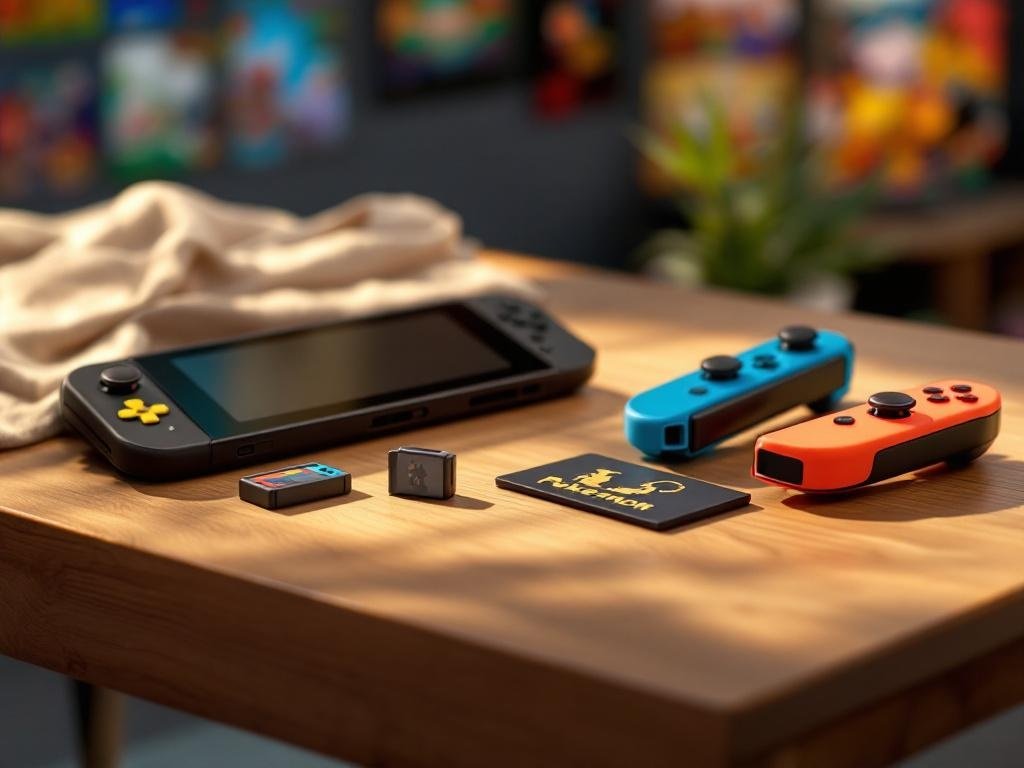
From classic Mario adventures to the next-generation Switch 2 and the Pokémon universe, Nintendo’s ecosystem shapes gaming. This article explores Nintendo games’ evolution, what Switch 2 hardware and games promise, the Switch library, Pokémon on the new system, and practical buying and playing advice to help readers understand current and upcoming titles, compatibility, and franchise implications.
From NES to Switch the evolution of Nintendo games
Nintendo’s journey in gaming began with the launch of the Famicom/Nintendo Entertainment System (NES) in 1983/1985, widely credited for reviving the home gaming industry. Landmark titles such as Super Mario Bros. (1985) and The Legend of Zelda (1986) set benchmarks for platforming and adventure design, introducing characters and templates that would define Nintendo’s output for decades. The Super Nintendo Entertainment System (SNES), released in 1990/1991, expanded technical possibilities and storytelling, with all-time classics like Super Mario World, The Legend of Zelda: A Link to the Past, and early Pokkén in the form of Pocket Monsters: Red and Green (Game Boy, 1996), which would become known globally as Pokémon.
With the Nintendo 64 (1996/1997), Nintendo pioneered 3D gameplay and analog controls, giving rise to immersive worlds in Super Mario 64 and The Legend of Zelda: Ocarina of Time. The GameCube (2001/2002) emphasized both local multiplayer and quirky creativity with series like Super Smash Bros. Melee and Luigi’s Mansion. Wii (2006) revolutionized input with motion controls, making gaming truly accessible, while Wii U (2012) experimented with dual screens and off-TV play, yet struggled financially despite gems like Super Mario 3D World.
The arrival of the Nintendo Switch in 2017 integrated home and handheld gaming. Nintendo’s design philosophy—deeply rooted in character-driven franchises (Mario, Zelda, Pokémon), ongoing control innovation, and games approachable by families—culminated with Switch’s hybrid format. This led to:
- The Legend of Zelda: Breath of the Wild: redefining open-world gameplay
- Pokémon Legends: Arceus: ushering in semi-open exploration for Pokémon
- Super Mario Odyssey: expansive platforming and improvisational play
- Animal Crossing: New Horizons: life sim cultural phenomenon
- Indie hits like Hades and Celeste, flourishing via eShop
This evolution positions the Switch 2 as a pivotal moment. Its changes will shape how franchises, new genres, and Pokémon itself can grow in both innovation and scale, impacting developers and the broader gaming landscape in the next generation.
What Switch 2 changes for players developers and the market
Nintendo Switch 2 hardware features (as of Spring 2024) are only partially confirmed, with most details inferred from credible leaks and official company statements. Based on reliable sources and consistent reporting:
- Confirmed:
- Switch-style hybrid form factor with detachable controllers (per Nintendo’s public shareholder communications and reliable industry reporting)
- Cartridge-based physical media, as confirmed by patent filings and supply chain reports
- Support for TV docking, with output likely at higher resolutions than the original Switch (official comments suggest enhancement in TV mode experiences)
- Larger and higher resolution display (multiple manufacturing leaks confirm samples of 8-inch LCD panels at 1080p)
- Built-in support for both handheld and docked play, key to Nintendo’s brand strategy
- Widely reported improvements, but not yet official:
- Next-generation NVIDIA Tegra chipset (expected Ampere-based CPU/GPU, with substantial performance uplift over the Switch’s 2017 mobile SoC)
- Increased memory (rumored to be at least 8-12GB RAM, crucial for larger open worlds and AI/physics systems)
- Storage expansion (speculation around 256GB+ internal storage, compared to 32/64GB on base models)
- DLSS-style upscaling in docked mode, enabling higher frame rates and resolutions without compromising performance
Implications for developers and players include:
- Faster load times due to upgraded storage.
- Higher frame rate targets (60+ fps) and stable performance make action and sports games smoother.
- Greater asset fidelity: improved textures, increased draw distances, and modern visual effects.
- Larger and more complex worlds, especially for first-party titles (e.g., “Pokémon Switch 2” projects).
Key opportunities and constraints for developers:
- Studio opportunities:
- Porting visually rich games previously not possible on Switch
- Adoption of mature engines (UE5, Unity, custom middleware) with full feature parity
- Expanded memory budgets facilitating ambitious cross-gen titles
- Leveraging DLSS or similar tech to efficiently target 4K TVs
- Constraints:
- Retrofitting older Switch games if backward compatibility isn’t fully native
- Adhering to eShop certification for both legacy and new titles
- Reconciling UI/UX across handheld and docked experiences, as the Switch 2 maintains this dual mode
- SDK updates and transition planning for multi-platform studios
Backward compatibility scenarios are widely debated. Industry consensus—supported by developer interviews and leaks—suggests most Switch titles will run natively or via emulation. Some may see enhancements, but features like expanded cloud saves or DLC forward-compatibility vary. Parity between handheld and docked modes remains a requirement, with scaled resolution and UI adjustments expected, keeping the play-anywhere promise intact.
In summary, Switch 2’s hardware uplift empowers developers to deliver richer, smoother experiences—expanding what’s possible for franchises like Pokémon—while challenging studios to balance backward compatibility, new tech, and the nuances of Nintendo’s unique ecosystem.
The Switch 2 game lineup first-party highlights and third-party support
The Switch 2 game lineup will play a crucial role in defining Nintendo’s next hardware cycle, blending familiar first-party tentpoles with revitalized classics and strong third-party engagement. Nintendo historically leverages its launch window with flagship franchises—Zelda, Mario, Mario Kart, or Splatoon—while inviting early adopters through polished new IPs and strategic remasters. For Switch 2, the sales spearhead will almost certainly include an upgraded Mario title (likely a new 3D platformer), at least one major multiplayer/family title (such as Mario Kart 9 or a sports entry), and robust support from Pokémon, possibly with a next-gen mainline release or a remastered classic.
Expected launch and early-adopter lineup:
- Super Mario (new flagship title)
- Enhanced ports: Zelda: Tears of the Kingdom, Mario Kart 8 Deluxe
- Pokémon Switch 2—either a mainline entry or advanced remake
- Splatoon, Mario Party, and an unannounced new IP
- Third-party: Just Dance, FIFA, possible Capcom/Ubisoft action games
Remasters and cross-buy enhancements will be central. Nintendo’s typical model allows Switch titles to be reissued with upgraded visuals and features—cross-buy policies mean users who own previous digital versions may get discounted or free access to enhanced Switch 2 editions. Expect publisher-driven remasters (Dark Souls, Metroid Prime, Fire Emblem), and ongoing cross-generation releases smoothing the transition.
Third-party support will broaden due to modernized hardware and dev tools. Studios favor Switch 2 when:
- Its user base promises significant sales
- Middleware/engine support (Unreal, Unity) offers efficient porting
- Cloud services enable demanding titles via streaming
Notable dual-platform launches include Square Enix RPGs, Atlus Persona releases, and major Ubisoft ports benefiting from Switch 2’s more PC-like architecture and better GPU performance.
The eShop will feature an updated interface and filters, streamlined digital ownership management, and improved cloud saves. Nintendo’s update and patch environment will lean into auto-updates and quicker certification, increasing quality and long-term in-library access. Franchise-heavy genres—platforming, JRPGs, action, and hybrid social/adventure—stand to benefit the most, while the improved tech promises a meaningful leap for series like Pokémon, Zelda, and Animal Crossing. The tightening of cross-gen compatibility ensures a long tail for classic Switch library favorites as studios shift fully to new hardware.
Pokémon on Switch 2 expectations mechanics and competitive impact
The Pokémon video game series began in 1996 with Pokémon Red and Green for the Game Boy, created by Game Freak and published by Nintendo and The Pokémon Company. Over nearly three decades, its mainline generations moved from 8-bit handhelds to full-featured home console experiences, while retaining developer Game Freak and a close publishing partnership with Nintendo. Key generational shifts included Pokémon Gold/Silver (Game Boy Color), Ruby/Sapphire (GBA), Diamond/Pearl (DS), X/Y (3DS), and notably Pokémon Sword/Shield (the first on Switch, representing the first home/portable hybrid mainline entry).
On the Nintendo Switch, Pokémon introduced mainline games (Let’s Go Pikachu/Eevee, Sword/Shield, Brilliant Diamond/Shining Pearl, Legends: Arceus, Scarlet/Violet) and significant spin-offs. These entries marked major shifts: Sword/Shield opened the doors to wider, interconnected Wild Areas, while Legends: Arceus and Scarlet/Violet fully embraced open-world design, seamless exploration, and non-linear progression. Critiques focused on technical constraints, graphical fidelity, and online play roughness, but fans praised the ambition in scale and new mechanics.
For Pokémon on Switch 2, expectations are high:
- Graphical upgrades: Sharper, more detailed Pokémon models, stable frame rates, improved lighting and effects
- Vaster overworlds: More densely populated regions, seamless loading, dynamic weather/biomes
- Expanded co-op and online: More players on shared maps, robust multiplayer raid or exploration systems
- Smarter AI: Wild Pokémon and trainers with nuanced behavior, better battle logic, more dynamic competitions
- Online and competitive play: Lower latency, dedicated servers, improved matchmaking, anti-cheat, and ranked support
Likely design changes:
- Bigger seamless worlds with more simultaneous NPCs and creatures
- Real-time cooperative activities with advanced online infrastructure
- Enhanced visual fidelity, especially for battles and special effects
- Persistent, evolving world events influenced by global player bases
- More robust endgame and seasonal content tied to online features
Potential challenges:
- Balancing backward compatibility and cross-generation trading
- Ensuring performance upgrades don’t disrupt traditional gameplay balance
- Preserving series identity amid technical leaps in graphics and multiplayer
- Maintaining fairness in competitive play as online complexity grows
A truly next-generation Pokémon could define Switch 2’s market appeal—not just as an heir to the current Switch library, but as a flagship experience showcasing Nintendo’s platform strengths and setting expectations for third-party developers and fans planning their game collection strategies.
How to decide whether to buy now or wait and long term outlook
Nintendo Switch 2’s hardware leap is a major turning point: faster processor and GPU, much-improved display, likely true 4K output docked, and enhanced storage all distinguish it from the original Switch. Key features include expanded online capabilities, broader third-party support, and increased performance for demanding titles. Software compatibility looks strong so far, with Nintendo committing to some backward compatibility; however, details are still emerging. Switch 2 promises a smoother, richer gameplay experience—especially for high-profile franchises and ambitious open-world releases like next-gen Pokémon—but at a likely higher price.
Pros of Buying a Switch Now:
- Lower price and frequent bundles
- Massive existing library: Mario, Zelda, Animal Crossing, Pokémon, and more
- Mature selection of accessories and peripherals
- Immediate access to current generation Pokémon titles and exclusive content
Cons of Buying Now:
- Switch 2 will soon set a new standard for features and graphics
- Some future releases may be exclusive to Switch 2
- Potential depreciation in resale value
Buying Scenarios:
- Casual player: Wait for Switch 2 if you want a future-proofed console, unless budget is key.
- Pokémon fan: If you crave playing latest Pokémon on release with best visuals, wait; if replaying current-gen or building a collection, the original Switch is still valuable.
- Competitive player: Switch 2’s likely online upgrades and FPS performance make waiting wise.
- Collector: Buy select Switch exclusives now; some may go out of print or rise in value with Switch 2’s launch.
- Multiplayer family: The current Switch ecosystem is mature for local play; Switch 2 will bring new features but at a premium.
Subscription, Digital, and Physical Considerations:
- Check Nintendo Switch Online’s evolving offerings; family/group plans might change with Switch 2.
- Digital libraries could transfer, but confirm compatibility for must-have games.
- Physical cartridges may work cross-gen, but always verify compatibility notes.
- Resale value drops with new console launches; consider future-proofing and trade-in timing.
- Regional releases may stagger; watch for global announcements before early adoption.
Checklist for Decision:
- Is your budget limited or can you invest in future hardware?
- Are there must-play titles you’ll only find on current generation?
- Do you need guaranteed backward compatibility for your digital/physical library?
- Are you seeking long-term support and access to upcoming flagship releases?
In the next few years, Nintendo will emphasize robust backward compatibility, actively remaster beloved games, and maintain strong support for both hardware generations. Pokémon’s evolution on Switch 2 is set to influence game collectability and the pace of franchise innovation, making careful purchase timing and library planning more crucial than ever for fans and collectors alike.
Conclusions
Nintendo’s game legacy and the Switch 2 transition combine continuity and fresh potential: core franchises like Pokémon will leverage upgraded hardware while the vast Switch library and backward compatibility will smooth adoption. By understanding historical context, hardware differences, launch lineups, and buying trade-offs, readers can choose the best timing and strategy to enjoy Nintendo games now and into the Switch 2 generation.